
Book Digest: August 20, 2007
As if there are not enough reasons to read The New Yorker, last week it was reported that James Wood (he of the “hysterical realism” coinage) was joining its staff. All well and good, but I was puzzled by an odd statement that was attributed to The New Republic editor (from which Wood was decamping): “The New Republic plays many significant roles in American culture, and one of them is to find and to develop writers with whom The New Yorker can eventually staff itself.” Am I the only person who finds this an odd piece of self-promotion?
From Richard Russo’s forthcoming novel, Bridge of Sighs:
Bill Clinton: Mastering the Presidency by Nigel Hamilton
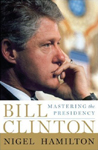
Until some biographer ascertains whether Bill Clinton inhaled or not, I look upon books on Clinton as incomplete gestures. Hamilton, who has also written JFK: Reckless Youth, Monty (a three-volume biography of British Allied commander Montgomery); Bill Clinton: An American Journey, the first in a projected three volumes on Clinton (this is the second), and, most recently, a monograph on the art of biography. Of his newest offering he asserts: “It shows how, in the depth of despair, written off as a lame duck, he turned defeat into victory, becoming the most popular American president, abroad, since John F. Kennedy.”
» Read an excerpt from Bill Clinton: Mastering the Presidency
The Girl With the Golden Shoes by Colin Channer

Looking at the Akashic web site you will see that Jamaican expatriate Channer’s latest novel is endorsed by a veritable literary who’s who. From Russell Banks’s afterward, which places Channer alongside Hemingway and Thornton Wilder: “It’s unfair to compare it to those great and finally incomparable works, as this is the work of a relatively young writer still mapping the shape of his imagination, and consequently there is here and there the occasional stylistic tentativeness one associates with such a writer.”
» Read an excerpt from The Girl With the Golden Shoes
Guantanamo by Dorothea Dieckmann, translated by Tim Mohr
Perhaps Dieckmann’s rigorously researched fiction will impress where news accounts of the harrowing conditions at Guantanamo have not. In what is by now a familiar story, a young German of mixed heritage, en route to India, passes through Peshawar, Pakistan, and is arrested at an anti-American demonstration. He is handed off to the Americans and flown to Cuba, where we are shown life as a prisoner. I am tempted to say “an unimaginable life,” yet Dieckmann has imagined it.
» Read an excerpt from Guantanamo
The Braindead Megaphone by George Saunders
This new Saunders volume collects a variety of work that has already seen light in various magazines and anthologies. Here is an excerpt from one of my favorites, “Manifesto: a Press Release From PRKA:”
At precisely 9 in the morning, working with focus and stealth, our entire membership succeeded in simultaneously beheading no one. At 10, Phase II began, during which our entire membership did not force a single man to suck another man’s penis. Also, none of us blew himself/herself up in a crowded public place. No civilians were literally turned inside out via our powerful explosives. In addition, at 11, in Phase III, zero (0) planes were flown into buildings.
Rescue Missions by Frederick Busch
Coincidental with the publication of his 2005 novel North, I had the pleasure of chatting with the avuncular Busch. Sadly, that satisfying skein has had to end with Busch’s unexpected death last year. Over his productive career, Busch published more than 20 books; this last collection of 15 stories would be as good a place as any to familiarize yourself with this masterful writer.
The Sutras of Abu Ghraib: Notes From a Conscientious Objector in Iraq by Aidan Delgado
Delgado is a practicing Buddhist who learned Arabic while living in Egypt, enlisted in the U.S. Army Reserve in 2001, and was deployed in 2003 to Nasiriyah and Baghdad, where he was assigned a post at Abu Ghraib. Repulsed by the depredations he witnessed, he applied for conscientious objector status, and received an honorable discharge after completing his tour in Iraq. This book is an account of the terrible things he saw—and what he thinks caused them.
When a Crocodile Eats the Sun: A Memoir of Africa by Peter Godwin
Zimbabwean Godwin’s memoir of his birthplace has been widely reviewed—and for good reason. It is a compelling account of the chaotic breakdown of a former colonial society, with all its perils and problems, and of personal revelations surrounding his father’s shocking secrets.
» Read an excerpt from When a Crocodile Eats the Sun
The Scandal of the Season by Sophie Gee
Australian Sophie Gee fashions an intriguing drama out of the lives, loves, and follies of the English petty nobles in early 18th-century London. We get to see the sickly and destitute—and not yet famous—poet Alexander Pope scheming to make his mark, so he conjures a poem to help him accomplish his aim.
» Read an excerpt from The Scandal of the Season
Fifteen Candles: 15 Tales of Taffeta, Hairspray, Drunk Uncles, and Other Quinceañera Stories edited by Adriana Lopez
In Latino society the quinceañera, which marks a 15-year-old girl’s transformation into an adult, is a sweet 16, bat mitzvah, and debutante ball rolled into one. Every year about 400,000 Latino girls turn 15, and most have a quinceañera—clearly, it’s a big thing. This anthology pokes, jabs, and celebrates this ritual.
Clean: A History of Personal Hygiene and Purity by Virginia Smith
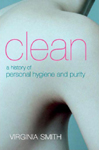
Books on swimming pools as social weathervanes, histories of taxi drivers in NYC, sanitation in Elizabethan England—every week brings new and original forays in social history. Virginia Smith’s multi-disciplinary approach looks at standards of cleanliness from prehistory to the present.
Walking Broad: Looking for the Heart of Brotherly Love by Bruce Buschel
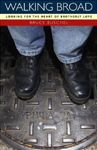
This is a charming kind of oral history—Buschel, a native Philadelphian, walks the 13 miles of Broad Street, a boulevard that transverses Philadelphia, and thus exhibits a magnificent array of urban legendry. His publisher explains:
Buschel talks to everyone from the old Italian tailor down the corner from the Chinese Mennonite pastor to the Jewish funeral home director across the street from Bilal, the Muslim restaurateur. On Broad Street, he finds livestock just a few steps from Joe Frazier’s gym. The newly dubbed “Gayborhood” is just a stone’s throw from the home of the heartbreaking Eagles. A world-class ballet rehearses at the Rock School while outcast rockers practice at the Paul Green School. The gas station attendant on Broad Street may be a recent immigrant, but he has already adopted the brusque manners and terse responses of a fourth-generation Philadelphian.