
Book Digest: May 21, 2007
My buddy Howard and I were involved in a somewhat heated dispute over recent remarks in this space suggesting the pantheon of iconic American painters was in his words, “small enough to fit on the head of a pin.” I had mentioned Grant Wood (and demurred on Disney and Warhol), but my friend Howard insisted on dragging in a long, snore-worthy list of accomplished artists—to which I suggested they might have a chance of recognition in the few zip codes resembling 02138 but nowhere else. Any thoughts on this subject, dear readers?
Also, having recentlymentioned new Edward Hopper tomes and the traveling exhibition, I would be remiss not to mention the 30-minute DVD—produced by the National Gallery of Art and narrated by Steve Martin—15 minutes of which is part of the traveling Hopper show.
It being Memorial Day next week, and as a few Americans will be opening their summer houses while millions of others will be shopping or some other patriotic activity mandated by the Department of Homeland Security, this space will be taking a short—well-deserved—rest. Though, in an act of resistance to Big Brother, no shopping will be taking place on my part. You might keep in mind these words of the late Kurt Vonnegut:
The Unnatural History of Cypress Parish by Elise Blackwell
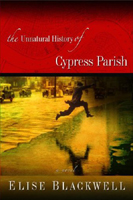
That Southern writers seemingly had been relegated to some ghetto of regionalism may explain my own lack of contact and familiarity—but in the ‘90s I discovered Reynolds Price and Larry Brown and Barry Hannah, and thus bloomed a love affair that has not subsided. Tom Franklin, Tim Gautreaux, Brad Watson, and Ron Rash were authors whose work—to my great fortune—I enjoyed immeasurably. Louisiana gal Elise Blackwell, now teaching at the University of South Carolina, has spun a hypnotic tale based on the historic Mississippi River deluge of 1927. Narrated by the elderly Louis Proby, a man looking back over his life just before Katrina, The Unnatural History of Cypress Parish exhibits a dynamic tension between the attractions of urban life and the splendors of the natural world.
Brad Watson, whose Heaven of Mercury shares some tonal similarities with Blackwell’s opus, observes, “The present haunts the past in this beautiful and timely book. Blackwell burns time, love, and loss down into a bed of discrete mnemonic coals. The voice is so true that it reads like the purest, most authentic memoir. This novel is tough, and sad, and lovely.”
My kind of book!
» Read an excerpt from The Unnatural History of Cypress Parish
American Youth by Phil LaMarche
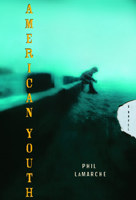
As one might expect, LaMarche’s mentors at the Syracuse University graduate creative writing program gush about his debut effort. To wit:
George Saunders: “The most compelling and exciting debut novel in years. What an amazing, gratifying book—we are lucky to have it. LaMarche proves that there are still young geniuses among us, wringing new life from the novel.”
Memoirist/poet Marry Karr: “Men have never written about becoming a man as Phil LaMarche does in this page-turning debut. He’s the new Cormac McCarthy-in-waiting, wielding firearms with a muscular prose also evocative of Hemingway. The story runs hot as a pistol bore all the way through, with characters you can’t bear to leave. LaMarche’s book is a heartfelt offering to the world.”
Not that I am inclined to cross swords with Ms. Karr, but Russell Banks’sRules of the Bone and Jim Shepard’sProject X come to mind as two books of the kind she is identifying. Nonetheless, LaMarche’s narrative, set in a New England town, is a powerful exploration of the gauntlet youths run to advance past the storms and travails of adolescence. Jerry Stahl goes to some length to say why he usually hates this kind of book, only to conclude:
American SkinAmerican History X,American YouthAmerican Youth
» Read an excerpt from American Youth
Later, at the Bar: A Novel in Stories by Rebecca Barry
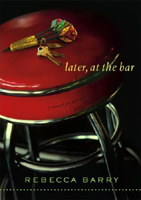
The great, good place is not an unusual setting for fiction—it’s surprising there are not more fictions that use it as setting for a story cycle or, in Ms. Barry’s case, a novel in (ten) stories. Of course, there is a danger and temptation of leaning too far toward the aberrational and psychotic, but in Barry’s skillful hands we have some appealing, bittersweet stories of the kind Richard Ford, Kent Haruf, and Richard Russo tell so well.
Lee K. Abbott, no slouch himself, lauds his former student:
Later, At the Bar,
» Read an excerpt from Later, at the Bar
Black Panther: The Revolutionary Art of Emory Douglas edited by Sam Durant
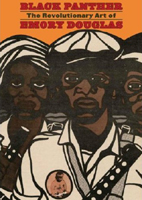
If you are familiar with the turbulent ‘60s—lived them or saw the footage—almost as ubiquitous as Che Guevara’s beret-clad visage was the poster of Black Panther Chairman Huey Newton seated in a wicker throne with a spear in one hand and a rifle in the other.
The Black Panther Party was founded in 1965 by Newton and Bobby Seale and for some years had a powerful effect in black ghetto communities and college campuses—until it found itself targeted by hyper-paranoid government agencies and a number of its key members were incarcerated or murdered.
Artist Emory Douglas was the party’s Minister of Culture, and art-directed its newspaper for the 12 years of its existence; this tome collects some of the potent and resonant images and collages Douglas created. As the book’s editor Sam Durant (better known as the director of the Lethal Weapon movies) writes in the introduction, “They are dangerous pictures, and they were meant to change the world.” Amiri Baraka proclaims that Douglas’s artwork functioned, “as if you were in the middle of a rumble and somebody tossed you a machine pistol.”
Incidentally, Douglas now lives with his blind mother in San Francisco, and is currently working on a children’s artwork series called “Health is Wealth,” a dialogue between two kids about HIV/AIDS. He explains: “My politics have evolved because politics always do, but I’m still concerned about the same things. I think people are drawn to my work right now because they see the same issues in it on the line today—police brutality, education, housing. It’s a different time but we have the same needs.”
Amen.

Reclaiming History: The Assassination of President John F. Kennedy by Vincent Bugliosi
Considering this book’s 1,632 pages, I feel confident that far more people will read from the multitudinous reviews than will even pick up this ballast of a book. Novelist Thomas Mallon, who unintentionally became a JFK assassination buff (in order to write Mrs. Paine’s Garageand the Murder of John F. Kennedy) and who can tell you the names of the strippers Jack Ruby hung out with, unpacks this gargantuan effort by former prosecutor Bugliosi in his sly piece at The Atlantic, “A Knoll of One’s Own.”
Mallon points out the dilemma facing Bugliosi: In order to make a claim of completeness, he entertains—and dignifies with serious analysis—even the most crackpot theories, making for less-than-compelling reading and manifold detours in the main narrative. Of course, as with all matters connected to the Kennedy case, controversy will continue to roil the sea of history, some of it amusing and loony.
But in the mainstream, the verdict on Reclaiming History doesn’t deviate much from that of Bugliosi’s hometown newspaper, the Los Angeles Times, which bloviates:
From this point forward, no reasonable person can argue that Lee Harvey Oswald was innocent; no sane person can take seriously assertions that Kennedy was killed by the CIA, Fidel Castro, the Mob, the Soviets, the Vietnamese, Texas oilmen, or his vice president, Lyndon B. Johnson—all of whom exist as suspects in the vacuous world of conspiracy theorists.
The Pesthouse by Jim Crace
The eight novels of Jim Crace (rhymes with “grace”) are an exhibition of a writer of splendid originality and compelling imagination. Just peek at Being Dead, his award-winning novel with a dead couple as the main characters. Some years ago Jim Shepard exclaimed something to the effect that he didn’t understand why Crace wasn’t more famous. (A frequent feeling one encounters in the seemingly marginal world of literary fiction and one that might be applied to Shepard as well.)
The Pesthouse is another one of today’s selections that will not lack for review attention—apparently even the literary world has its corrections. Written about a post-apocalyptic America, The Pesthouse may appear to tread the same path as Cormac McCarthy’s The Road, but I can assure you that while both books are similarly preoccupied, they could not be more distinctly different—which my recent chat with Crace will bear out whenever I get around to publishing it. In the meantime, I urge you to feast on the Crace oeuvre, where each book is informed by a wonderful playfulness and an unleashed imagination.
» Read an excerpt from The Pesthouse
Tattoo Art & Design edited by Viction:ary

Some years ago, in a pension, in Barcelona, a fellow pilgrim showed me a book of Maori paintings that depicted that culture’s incredibly detailed facial tattooing. Despite the increased popularity and visibility of tattooing in contemporary America and the rest of the exponentially post-industrial world, I have never found it a subject of much interest. This anthology of nearly 500 designs from over 60 tattoo designers serves as a corrective—for one thing, simply removing the distraction of the denizens upon whose bodies these embellishments are found.
Antonio’s Gun and Delfino’s Dream: True Tales of Mexican Migration by Sam Quinones
Mexico’s border with the U.S. has its own culture, invisible to outsiders—especially know-it-all (or know-nothing) legislatures—and has occasionally received intelligent attention by writers like Ruben Martinez and Jim Harrison, whose July 2001 Men’s Journal piece “Life on the Border” is a superior example of concerned and conscientious journalism:
xenoids
Los Angeles Times staffer Sam Quinones’s second collection puts a sharp, unflinching lens on the migration of Mexicans into the United States. Luis Alberto Urrea (The Devil’s Highway and The Hummingbird’s Daughter) celebrates Quinones:
[He is] a border legend. For those in the know, his reportage has been cause for celebration. Now…he takes us behind the lines and undercover. He puts a human face on “illegal immigration,” and he gives us stunning stories of survival and dread. However, he accomplishes something more valuable than a mere parade of sensational set pieces—Quinones starts to put the complex issues in the light of understanding and hard-won wisdom.
» Read an excerpt from Antonio’s Gun and Delfino’s Dream
Thick as Thieves: A Brother, a Sister—a True Story of Two Turbulent Lives by Steve Geng
Check back in the archives if you doubt my claim, but to date I have not used the word “amazing” to describe any of the books I have talked about here. Steve Geng’s story is an amazing one—which doesn’t necessarily make for an amazing book—and will no doubt be a valid counterpoint to all manner of posturing, would-be renegades. A partial homage to his sister, legendary New Yorker writer Veronica Geng, Thick as Thieves covers Geng’s long, strange trip—he’s now 64—from thrill-seeking thief, to junkie, to acting in Miami Vice and Jonathan Demme’s Miami Blues (a delightful, albeit dark film based on a Charles Williford novel), with numerous side trips to various states’ penitentiaries. James Marcus, a dependable and enjoyable book person (who is worth reading whether or not his subject interests you), concludes:
Thick as Thieves
No doubt.