
From Here to There
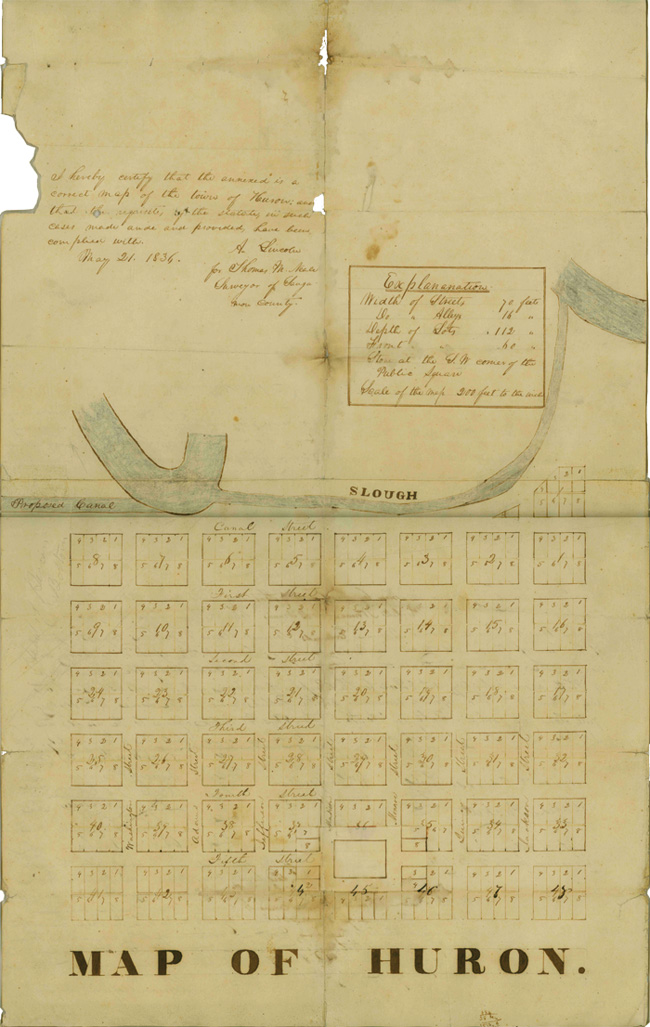
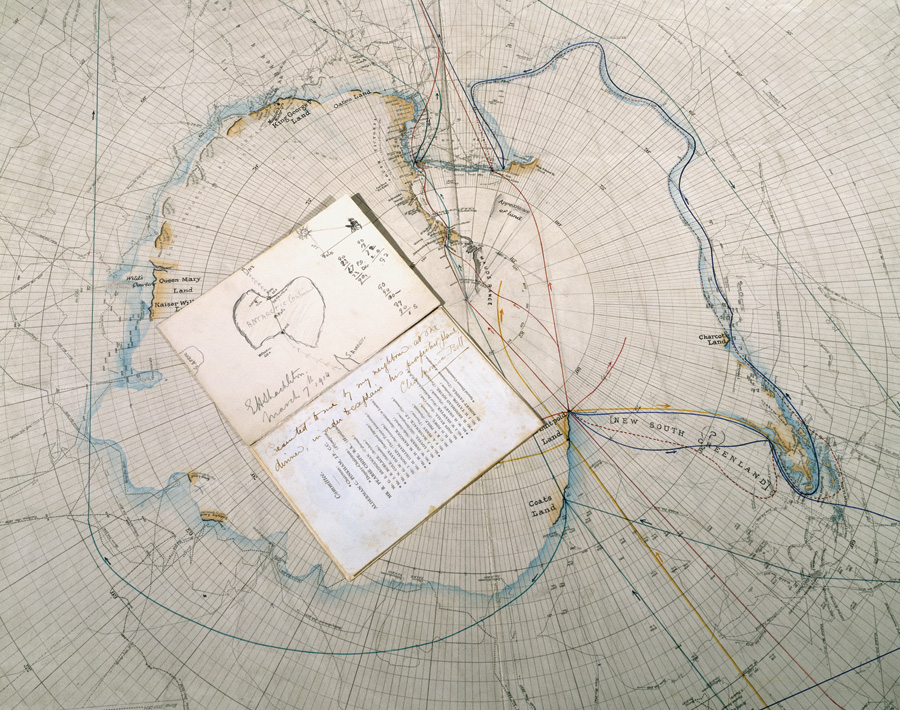
A wonderful new book features the work of the Hand Drawn Map Association, a repository of maps ranging from drawings of simple directions to a map by Abraham Lincoln.
Interview by Rosecrans Baldwin
From Here to There, a wonderful new book from Princeton Architectural Press, features the work of the Hand Drawn Map Association (HDMA). There are mountain-hiking guides, a guide to a woman’s injection sites while she’s suffering from disease, and a guide to a girl’s school locker. A map, it turns out, is a very elastic thing. Read the interview ↓
On Wednesday, Sept. 15, HDMA Founder Kris Harzinski, along with the book contributors Will Haguhery and Matthew Rodriguez, will present a selection of the maps at the New York Public Library. The HDMA is also participating in an exhibition at the Pratt Manhanttan Gallery called “You Are Here: Mapping the Psychogeography of New York City” (Sept. 24, 2010 through Nov. 6). More events listed here. All images courtesy and copyright © the HDMA.
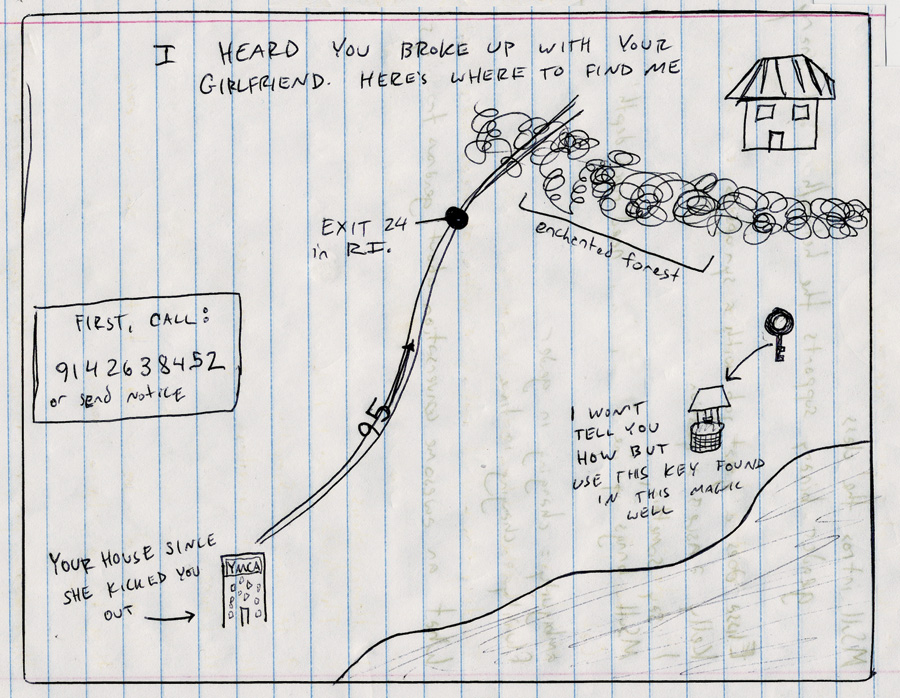
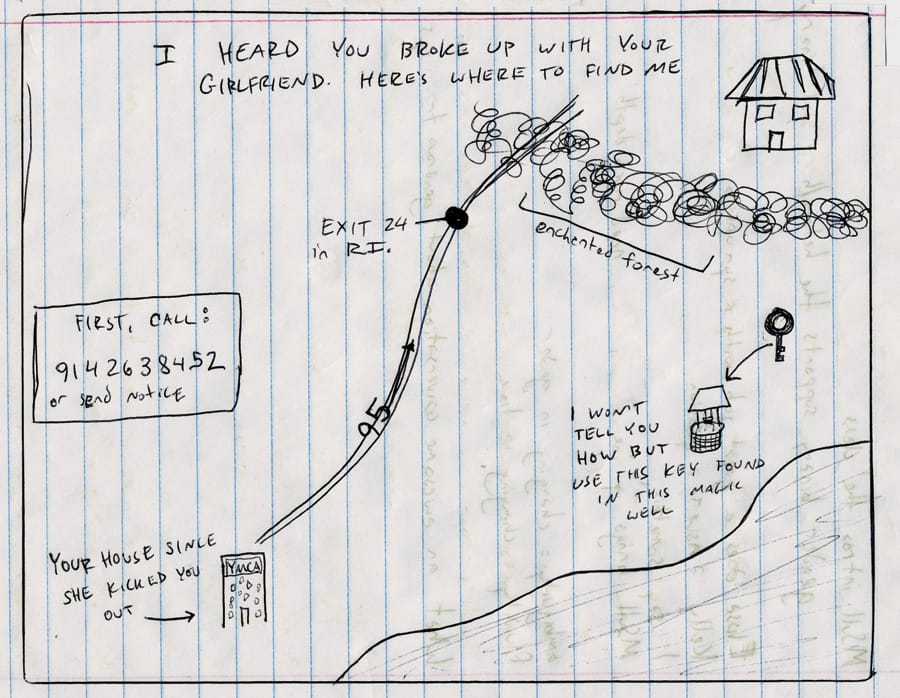
Lola drew this map to document the end of an era in her life. When her ex-boyfriend broke up with his then-girlfriend—a girl with whom Lola did not really get along with—she drew the map to let him know that she was still around if he needed a friend or wanted to hang out. Unfortunately for Lola, the reference to living at the Y.M.C.A., intended as a joke, offended her ex and gave her nemesis fuel for a rather caustic discussion that followed.
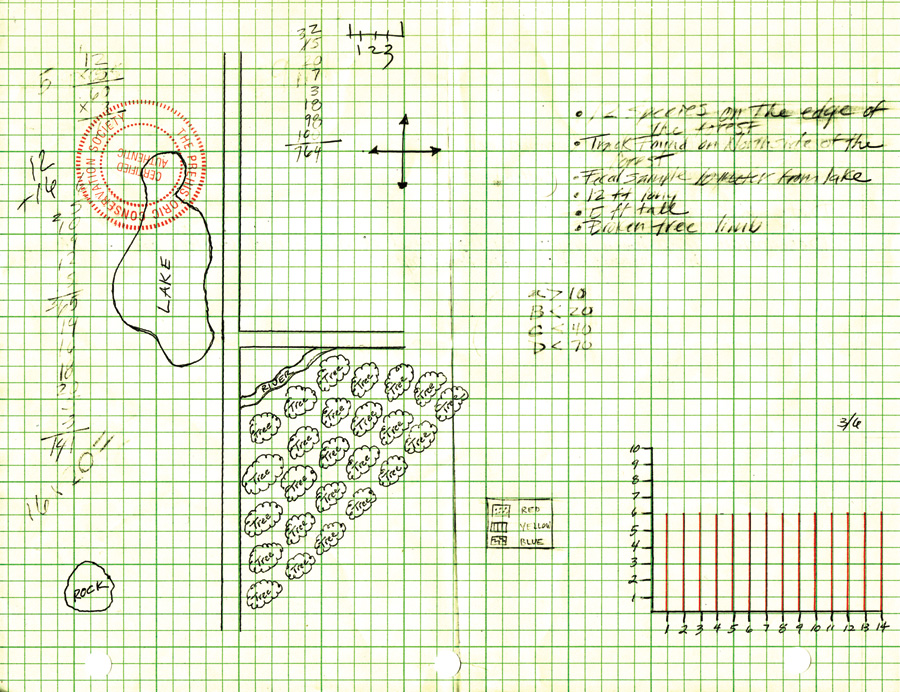
Gina made up a story to explain her map: It was found in the lining of a binocular case abandoned on the Kansas prairie by Sir Alfred Griffen, a researcher of hybrid animals and associated breeding techniques. The text on the map references 12 different species found on the edge of the forest, some animal tracks, a fecal sample taken 10 meters from the lake, and a curious broken tree limb.
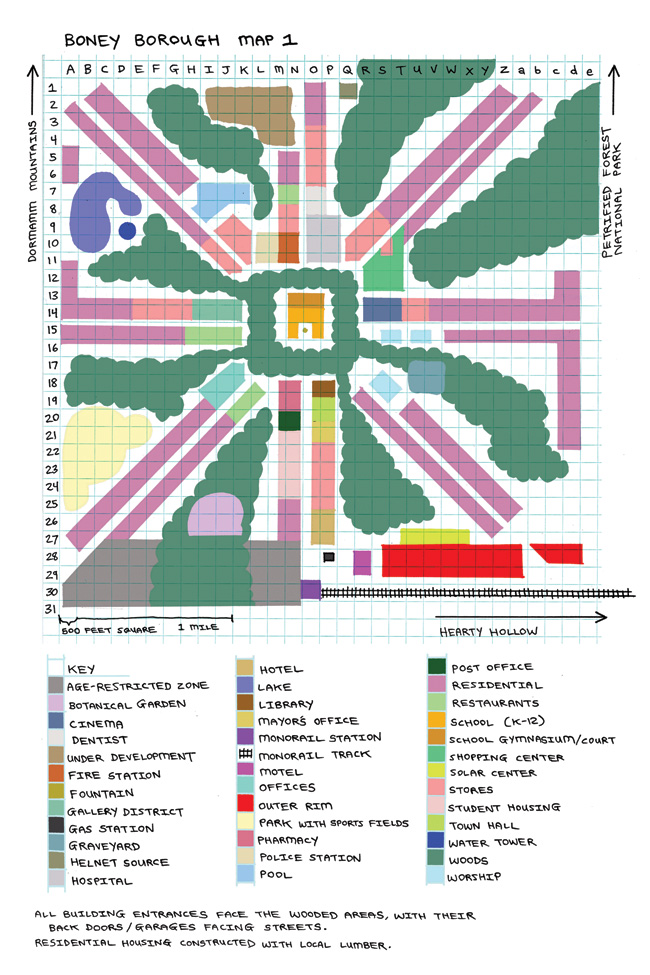
This map illustrates various locations in Dash’s comic BodyWorld. At the beginning of each new scene, Dash refers to the map so readers can get a sense of individual characters’ whereabouts. The design of Boney Borough is loosely based on Walt Disney’s original plans for his utopian community, Epcot, an abandoned project that later became the famous theme park.
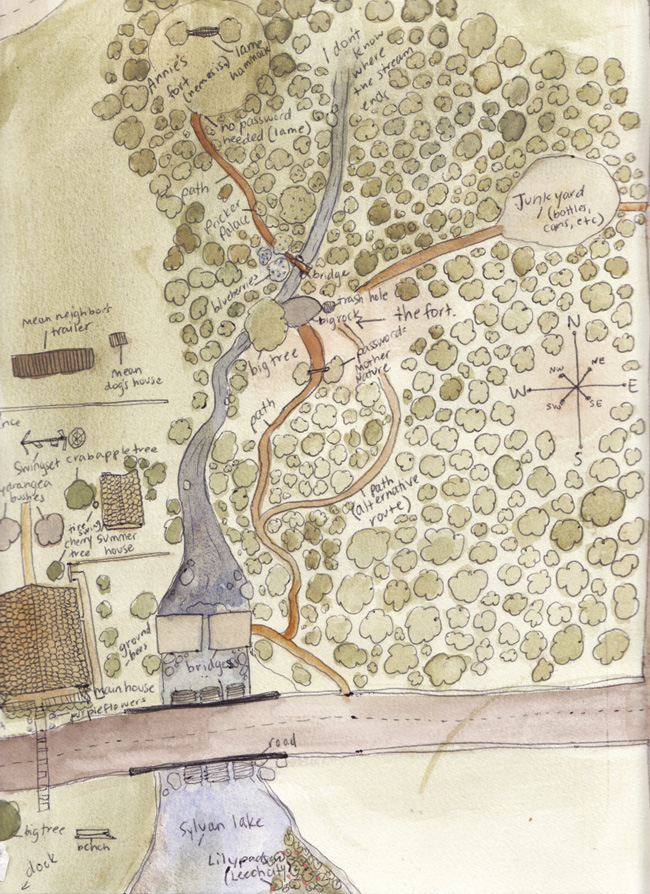
Kelly created this detailed map of the woods surrounding her grandmother's cabin in New Jersey. The map includes various features around a fort she built as a child, including a neighboring fort made by Annie, her childhood nemesis.
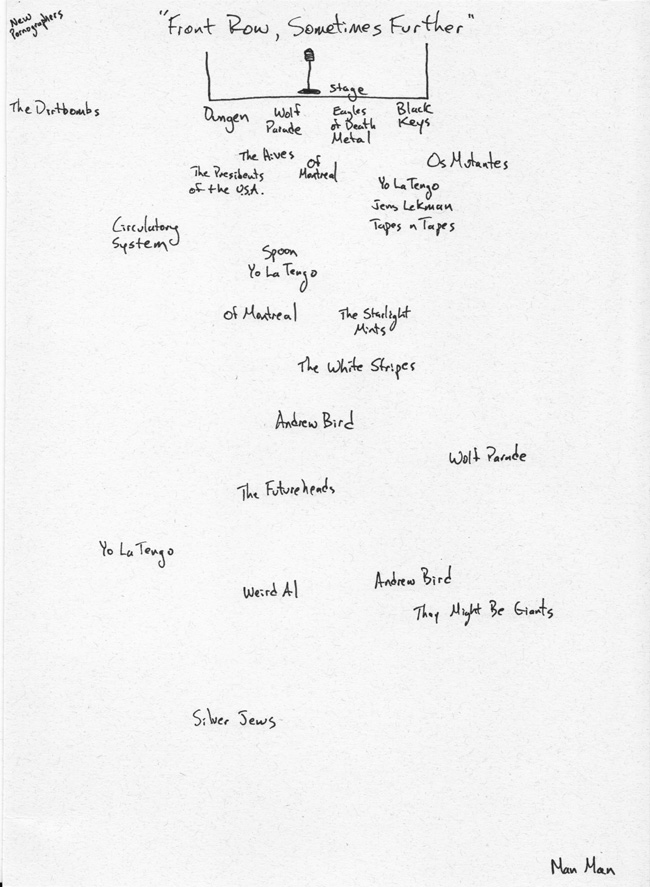
A big live music fan, Tony created this map to show his proximity to the stage at the many concerts he has attended.
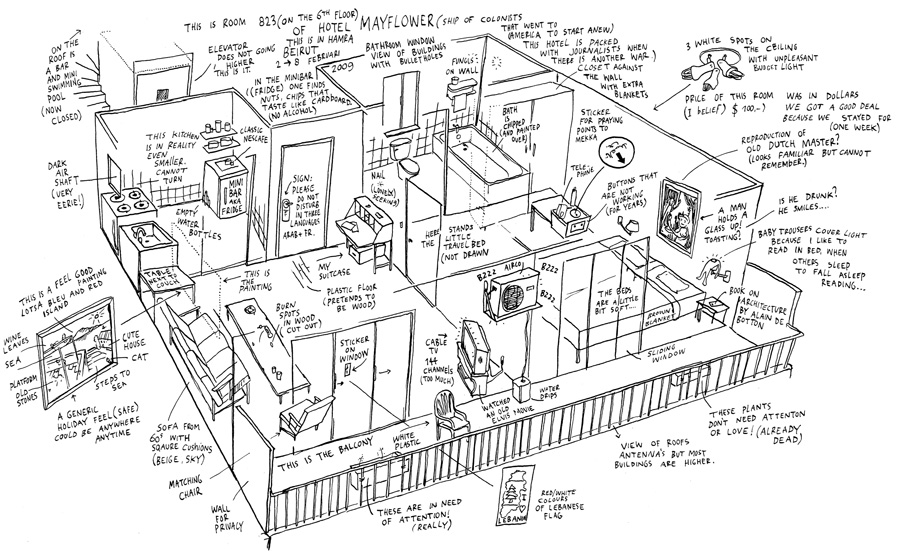
This map shows a room at the Mayflower Hotel in Beirut, which is often filled with journalists when there is a war. Jan stayed there for a week in February 2009. On the map, he obsessively documents every aspect of the room, including an “I ♥ Lebanon” sticker on the window of the sliding door, an eerie air shaft, and burn spots on the coffee table, as well as the baby clothes he placed on the bedside lamp for reading at night and the movie he watched on the room's television.
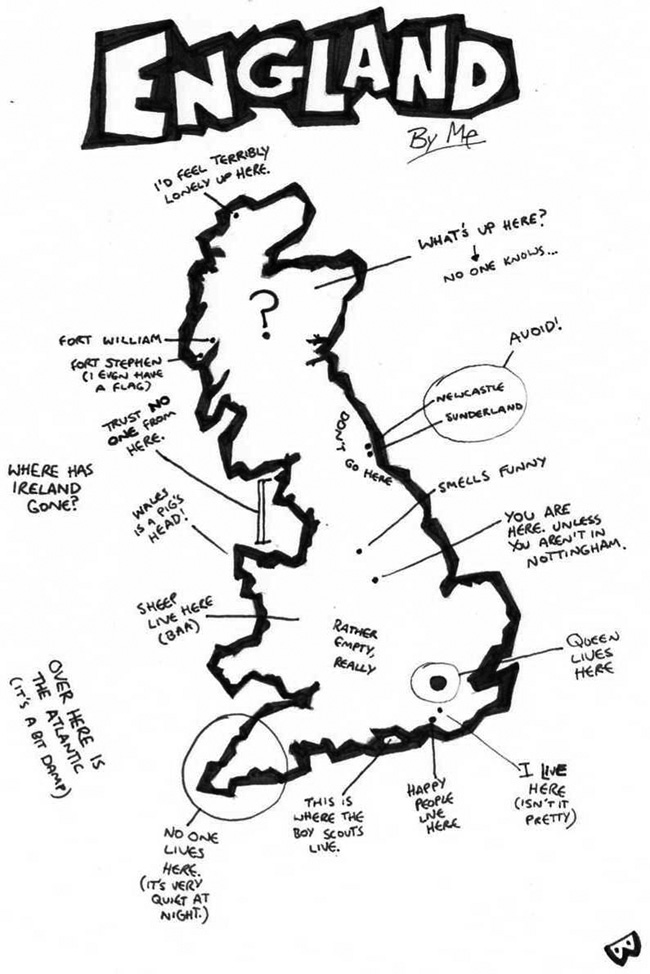
Thomas drew this map of England in a notebook during a class in his first year at university. The drawing features details such as Stephen’s home, the Queen’s residence, and his personal belief that Wales looks like a pig’s head. Ironically, at the time Stephen found the drawing among his papers, his parents were vacationing in the area bordered by the warning “Don’t go here.”
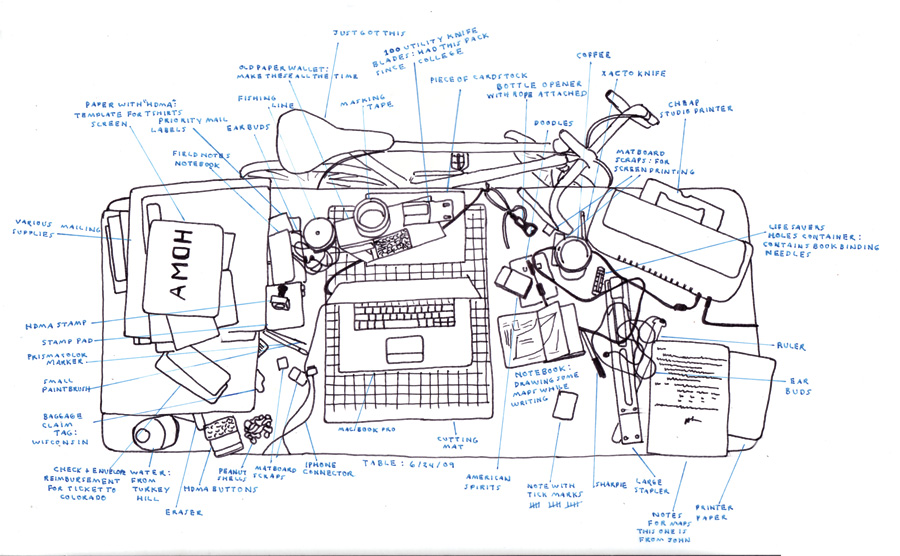
The vast majority of maps presented in this book relate personal stories that reveal glimpses of life's processes. In conclusion, here is Harzinski’s chance to share part of his own story, as it relates to the Hand Drawn Map Association and this book. This map depicts the place where this book was created, his studio. The table where he spends most of his time writing is a messy landing pad for the bits and pieces of various projects. The diagram shows his desk as it looked on June 24, 2009, as he was nearing completion of this work.
Artist interview
With all the maps you’ve seen submitted to the HDMA, what do you value most in a good hand-drawn map?
One of the main things I look for is an interesting story. The map, no matter how simple or complex, has to reveal something to the viewer. Perhaps it’s an overlooked detail of a well-known place or a uniquely personal adventure played out in a familiar city like New York. It might be a story of journeying, traveling, getting lost—something we can all relate to—or it might be more simple, like a map to a favorite taco restaurant. Of course, I look for interesting visual qualities as well. The paper might be particularly unique, or the way it’s drawn, an interesting mark or line, might grab my attention. There’s also a great diversity of symbolic representation. It’s interesting to note how different people represent common items like a house, a hill, or a stop light.
Has your appreciation of maps changed as the project’s grown older?
I suppose it has. I’ve encountered things I didn’t originally anticipate, like highly detailed maps of completely fictional worlds. After seeing so many different maps, perhaps the only thing that’s changed for me is allowing for a really broad view of what a map can be. The collection includes, for example, maps of the body, the sun, the internet, places encountered in dreams, a diagram for setting up a stereo system, a fictional world created by outlining coffee stains on a piece of paper, even a map of trash found on a median strip.
Many of the maps in your book appear to have little practical use to anyone but the owner, and sometimes none at all. What good is a map if it doesn’t lead anywhere? When is a map no longer a map?
The maps in the collection aren’t necessarily meant to be useful. Some of them certainly are, and that’s great, but not quite the point. In my mind, it’s more about amassing an archive of creative interpretations on pieces of paper, memories of various locations, stories of wandering, exploring, and discovering, not to help direct someone to a given location, but instead to celebrate how place can play such a powerful role in our lives.
When is a map no longer a map? It’s all about place for me. For a map to be part of the collection it has to reference some kind of location. It doesn’t have to be real, but it does have to be a place.
What’s most recent favorite map?
That’s tough to say, really. I very much enjoyed a recent map called Hiking Los Angeles. It was drawn by Sean Tejaratchi, ca. 1982, and depicts various hiking trails in Malibu Creek State Park. Sean also included some of his personal observations and memorable events while hiking at various times with his dad and friends. It’s great for all the reasons mentioned before. It has nice story—a kid exploring the mountains with his dad on the edge of a major metropolitan area. It has great visual qualities as well. It even has an edge that was chewed off by his pet hamster at one point.
Now that you’re so map-attuned, do you find maps cropping up in your own design work? Do you ever experience map fatigue?
Sure. Maps are very much a part of my work as an artist and designer, but I think that has always been there. Map fatigue? I don’t think so, but internet and email fatigue for sure.