
The art of political persuasion

I understand him. He cares about two things, how people perceive him and how much cash he has in the bank.
Mark Cuban was persuaded against Donald Trump by a conversation with the man himself, who Cuban says literally “doesn’t know how technology works.”
↩︎ Bloomberg Businessweek, posted Oct. 19, 2016
In businesses, on the street, and in peer groups, ideas are shaped more by face-to-face interaction than by digital media.
Face-to-face is the biggest determinant of voting behavior. Sociologists show that communities in physical proximity share voting behaviors far more closely than broad demographics like race, income, or age.
↩︎ Nautilus, posted Oct. 17, 2016
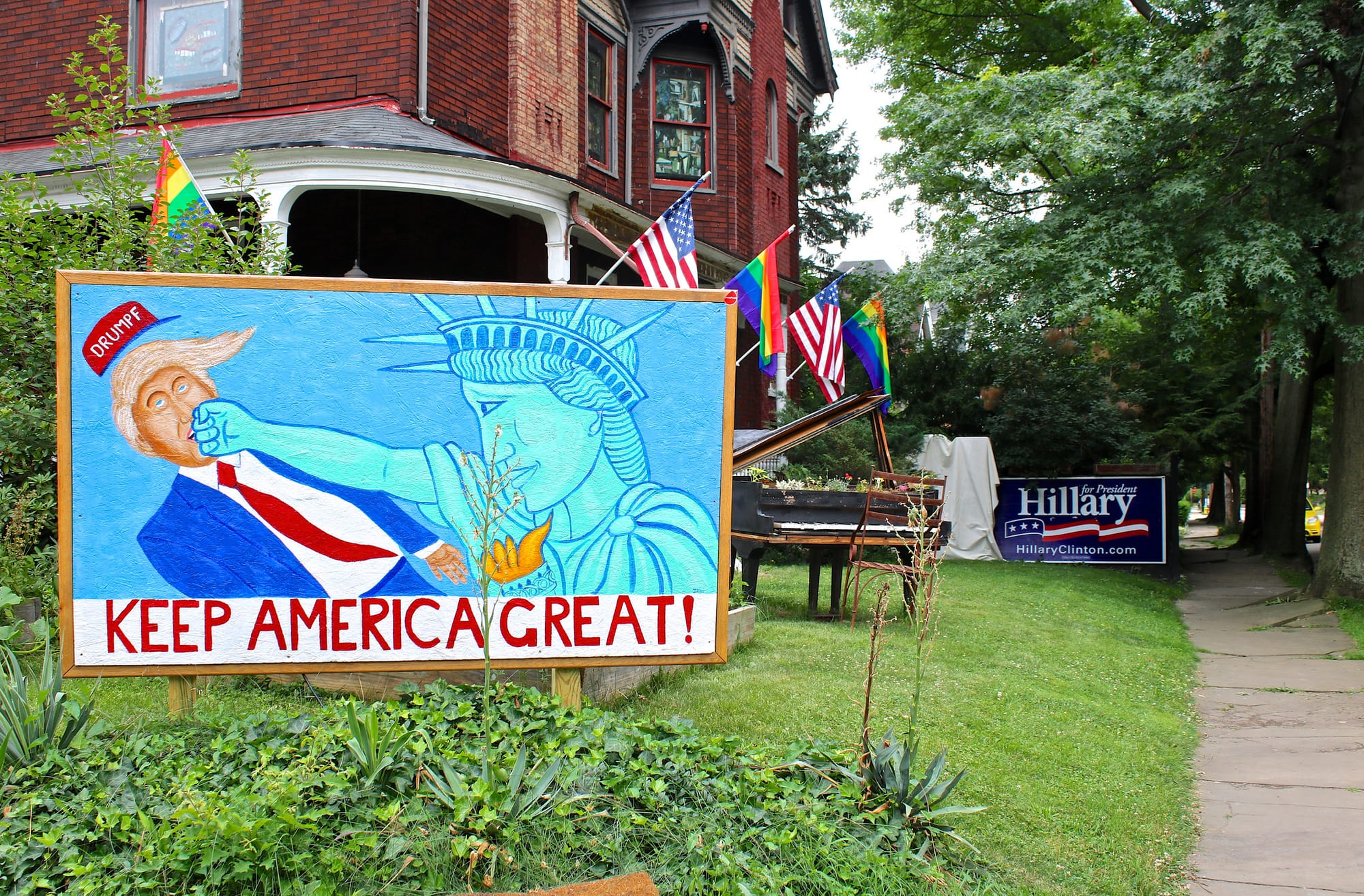
Across American lawns, neighbors wage cold proxy wars via subtle (and overt) political yard signs. Research shows that lawn signs can be an effective political persuasion investment in close races.
↩︎ posted Oct. 10, 2016
How to have fun at the family dinner table
The New York Times suggested as far back as the Bush years—2005—that political persuasion was dead. Bu 10 years later they published one of the best summaries of current thinking on the topic, which defined “moral reframing” as the key element of successful political persuasion. For example, the most important thing to know if you’re trying to persuade someone: let them talk about their values, then communicate using their language.
To do it, you have to get into the heads of the people you’d like to persuade, think about what they care about and make arguments that embrace their principles. If you can do that, it will show that you view those with whom you disagree not as enemies, but as people whose values are worth your consideration.
↩︎ posted Oct. 11, 2016
Did we watch the same debate?
Did you watch the debate with a friend? Study shows that political speeches are more persuasive when you watch with others.
↩︎ posted Oct. 11, 2016
A brief conversation about marriage equality with a canvasser who revealed that he or she was gay had a big, lasting effect on the voters’ views.
Confirmation bias is a double-edged sword: Postmortem on the infamous retracted study that went viral for its claim that gay canvassers could persuade skeptical voters to support gay marriage.
↩︎ New York Magazine, posted Oct. 11, 2016
Vote for the sweater?
Undecided voters were the centerpiece of Sunday’s town hall debate, which neatly fetishized the subject of political persuasion as manifest in Ken Bone, a Midwestern, nonpartisan, sweater-wearing, honest American immediately loved on social media.
We have more undecideds this year than we did in 2012, largely because so many people would rather not vote for either candidate.
↩︎ posted Oct. 11, 2016
Democratic endorsements from conservative papers seemed to have more influence than a Republican endorsement from that paper would, and the same concept applied to left-leaning papers endorsing conservative candidates.
Endorsements from newspapers only change minds when they buck their own trends.
↩︎ NPR, posted Oct. 11, 2016
The value of debates
After this weekend’s debate, it’s understandable if some people want to give up on the format entirely. Do debates matter? They would appear to this year: Trump’s fall in the polls began with his disastrous first debate performance, and after Sunday night some undecided voters shared how the televised encounter helped them make up their minds.
Even if Trump’s candidacy is a little extreme, two thirds of voters told Pew during the last election the debates were helpful in determining their vote.
In the very first live TV debate JFK used his telegenic presence to charm Nixon voters all the way to the White House.
↩︎ posted Oct. 11, 2016
The campaign against Trump seems to have deepened a trait of Clinton’s: a pessimism about the possibility of political persuasion. James Carville, speaking on the Showtime campaign documentary “The Circus,” said that Bill Clinton always believed that he “could talk a dog out of a pork chop”—that, given enough time, he could change anyone’s mind. Hillary, Carville said, is “more realistic” about people.
A couple months ago we thought this was the election when populism would come back. What is it without persuasion?
↩︎ The New Yorker, posted Oct. 11, 2016