
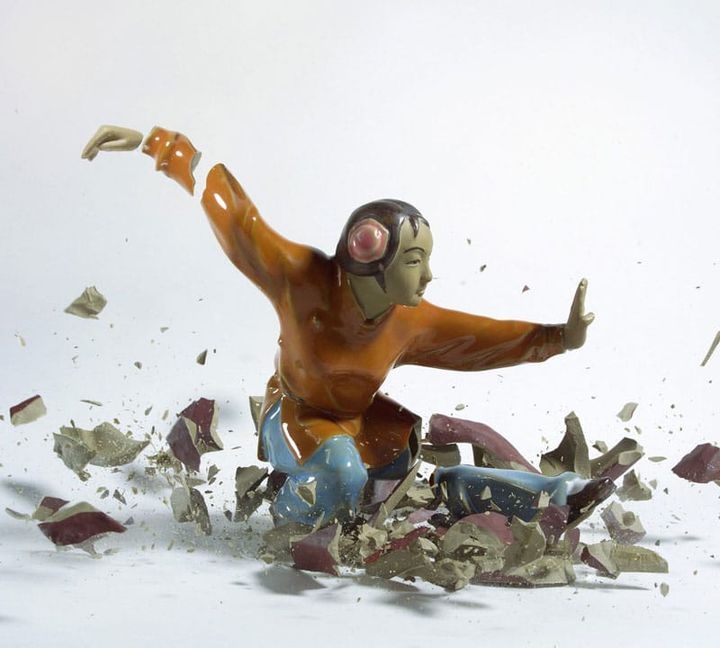
Still Life
Martin Klimas breaks recognizable objects so they become something else, and stops us just at the moment of transformation.
Martin Klimas breaks recognizable objects so they become something else, and stops us just at the moment of transformation.
The composition of everyday things is up for review. Each week we find out new things about genes, about molecular structures—so why not the letters we read on signs, in magazines, on the flipside of our hovering skateboards?
Chris Jordan takes reports of large-scale waste and consumption out of the realm of statistics and places them squarely in front of our faces.
It’s not unusual to find art in a gallery made from human materials—but some images are more graceful than others. The watercolors and packing-tape installations of Robert Waters are frank and intimate with luminous simplicity; what they’re made from serves the message, and not the other way around.
Even if you’ve never heard his name, chances are you’ve seen Shepard Fairey’s stickers, posters, and stencils on lampposts in New York City, or peeking out from doorways and street signs in one of the countless countries where his street art has traveled.
Think of your favorite teddy bear. Now imagine it’s been ripped open, gutted, and turned inside-out. That’s what Kent Rogowski has done to the iconic stuffed animals of our childhoods.
Terry Rowlett searches for meaning through contemporary work with undeniable ties to painting’s history. In his work, Rowlett’s friends mirror his own struggles and exalt his triumphs.
Art, female identity, and day-to-day life intersect in Melissa Ann Pinney’s photographs. Deeply focused on the worlds of her daughter and other girls, Pinney’s work tells a story of girlhood as it’s being written.
For Coke Wisdom O’Neal, placing portraits of loved ones on three-dimensional pedestals is merely the next move in a broad challenge of traditional portraiture.
KayLynn Deveney photographs the comings and goings of a man in Wales, drawing out moments of repose and oddness from the humdrum.