
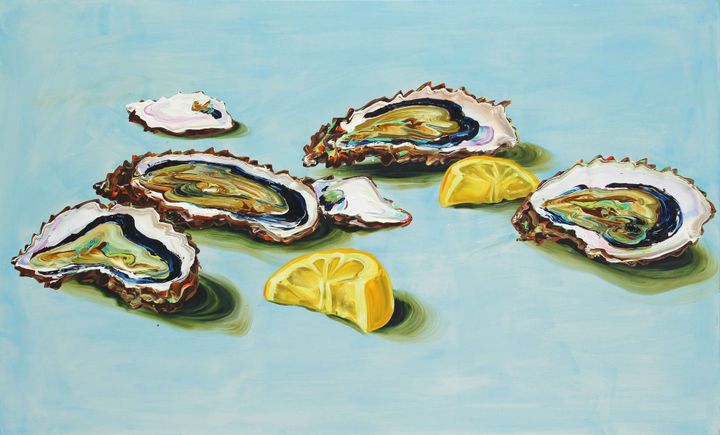
Reconsider the Oyster
Tracking a single oyster from the Gulf to Bourbon Street, to a 1,300-ton pile of shells, provides a tour through Louisiana’s precarious coastal economy.
Studying drivers across the country for signs of license-plate prejudice—or, why everyone loves Vermont drivers and hates Texans.
The victim of a robbery starts attending trials in New Orleans to understand the system while her burglar serves time in jail. Then he gets out.
Why it’s the duty of every white American to burn a Confederate flag.
There are eight million stories in a city. How many are there at Walmart? Random telephone calls made to hear about life inside.
Clemency is supposed to be a “fail-safe” in our judicial system. Thanks to a handful of powerful, well-paid political appointees, that notion is proving lethally incorrect.
NFL star Randy Moss is now a high school coach. A Vikings fan explains how watching one childhood hero move on with his life helps him say goodbye to another.
Mainstream country music is dominated by bros singing about girls in cutoffs and drinking tequila. But some female country artists are ready to exchange fire.
Passing the summer days in North Carolina’s low country often meant sitting on the porch with Grandpa and his radio. Today, it doesn’t take much to go back there.
Lincoln’s speech at Gettysburg was short: only three minutes long, following a moving, two-hour performance by famed orator Edward Everett. It also was nearly meaningless.
A special Fourth of July edition of our series where an editor randomly calls people in small towns around America to see what’s happening.
For residents of Patsy Cline’s hometown of Winchester, Va., the struggle over how to remember the famous country singer begins with deciding what sort of a legacy she left—and whether they want it.
Our man in Boston sits down for a frank accounting with Tony Horwitz, author of beloved works like Confederates in the Attic: Dispatches From the Unfinished Civil War. Here they chat about his new book on John Brown—still a divisive figure in America, particularly in these days of terrorism—and the
Our man in Boston talks with writer Ron Rash about his latest book, America's great regional voices, the high percentage of readers in New Zealand and Australia, and the misery that accompanies putting a novel together, where it's rather more fun to stick pencils in your eyes.
Continuing our series of randomly calling people around the U.S. to find out what's going on in their towns, this time we focus on the Olympics—how do folks who come from the same communities as America's Olympians feel about their star athletes?
Victory has many faces—some of them just happen to be painted. A story of violence, true love, the road from New York to Lexington, and the religion that is college basketball.
A two-week journey across the US—specifically towns named Paris, with a clipboard and a hundred questionnaires—to uncover what Americans think about the French.
Tornado season is a distant concept for most people. For some, it’s a scary but known part of life. Then there’s what happens when one of the South’s deadliest storms in history destroys your house.
For some Americans, the French way of life is best. Other people simply prefer "freedom fries." A two-week journey across the U.S.—passing through a handful of towns named Paris—to find out what Americans really think about France today. (Part three of four.)
For some Americans, the French way of life is best. Other people simply prefer "freedom fries." A two-week journey across the U.S.—passing through a handful of towns named Paris—to find out what Americans really think about France today. (Part two of four.)
For some Americans, the French way of life is best. Others simply prefer "freedom fries." A two-week journey across the U.S.—passing through a handful of towns named Paris—to find out what Americans really think about France today. (Parts one through three of four.)
Hank Williams III blew the doors off country music last fall when he released three ambitious, experimental albums all on the same day. A conversation about tradition, hardcore, and punishment.
An unfinished autobiography and a 1980s biopic turned Frances Farmer, one of the great golden-era stars, into a lobotomized zombie. The main trouble: Frances Farmer wasn’t lobotomized. An investigation to set one of Hollywood’s most convoluted stories straight.
Florida is America’s most-abused state, and Tallahassee its biggest target for bi-coastal writers who pick low-hanging fruit—rednecks, old people—and wouldn’t know an alligator from their elbow. The slander has gone far enough. On behalf of every Tallahussey and T-Town man, let the corrections begin
New York is supposedly the home of the willful and headstrong, the forthright and brassy--but when a cousin from Nashville rolls into town, everyone else seems meek.
In South Carolina’s beach country, not having air conditioning, nevermind fans, is these days downright strange. A personal memoir of worried grandmothers and infant decapitation.
It's easy for Yankees to see the South as a swamp, full of evangelist in-breds and Fox-fed yokels, when the media reinforces the stereotype.
Southerners routinely get trashed up north, where they're either derided as racists or hayseeds, or the offspring of siblings.