
The High Life
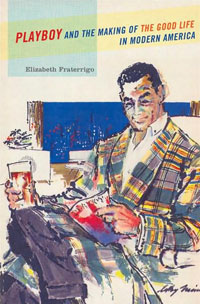
There was a time when people would joke that they read Playboy for the interviews, eschewing any interest in the centerfolds and other decorative editorial. It should be obvious that what you can find on the newsstand is indicative of something about the cultural moment, and Loyola (of Chicago) University mentor Elizabeth Fraterrigo’s new tome, Playboy and the Making of the Good Life in Modern America (Oxford University Press), effectively makes that point.
Hugh Hefner did not invent the titty magazine, but in the case of Playboy he imbued it with a pastiche of elements—serious interviews of interesting people, sex advice, mixological information, cartoons by the inimitable Gahan Wilson—that distinguished it from the other skin publications. Hefner explained (circa 1953):
Playboy
This doesn’t refer to the money machine that became Playboy Enterprises—calendars, clubs, bunny tchotchkes, a Hefner TV program, the Playboy Mansion (in Chicago), and other shrewd branding. But those marketing initiatives were a large part of the deal. Ambitious lotharios could look to Playboy for style tips and necessary accoutrements for that sought-after good life.
Fraterrigo concludes:
PlayboyPlayboy
The transformation of mid-century America is an interesting moment to look back on. One does marvel at the way Hefner’s creation rooted itself in the mainstream, especially in light of those wild, drug-crazed, and orgiastic ‘60s. The Making of the Good Life does well in making sense of that.