
Trump Goes Hitler?
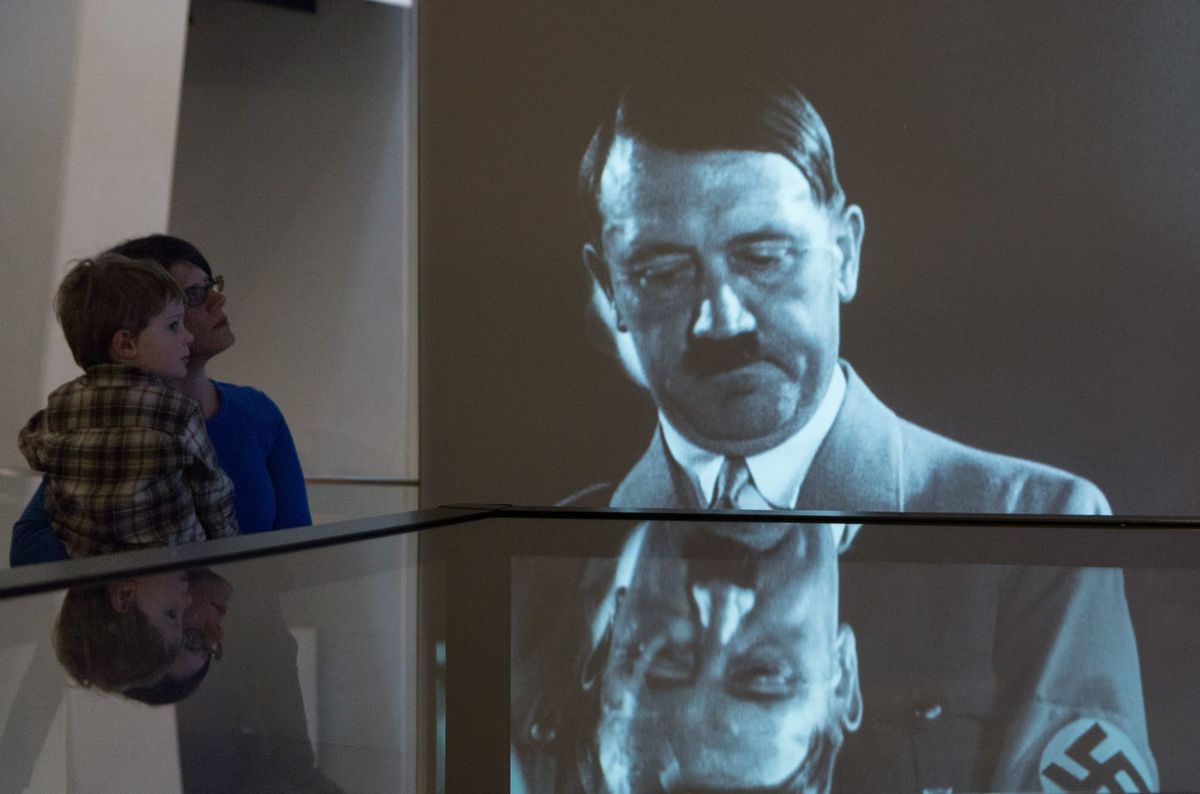
“The Führer Often Described his Defeats at Stalingrad and in North Africa as Great Victories”
In no particular order, four Hitler-related things reported about Donald Trump and his family by Marie Brenner for Vanity Fair in 1990:
1) As an in-joke, Jeffrey Walter, a cousin and Trump Organization employee, would click his heels and heil whenever he visited Trump’s office.
2) According to Ivana Trump, Trump liked to read a book of Hitler’s speeches before bed.
3) When confronted about the book, Trump instead claimed he owned a copy of Mein Kampf, and that it was given to him by a Jewish friend. Later he said, “If I had these speeches, and I am not saying that I do, I would never read them.”
4) The Jewish friend, who is not Jewish, says that he gave Trump a Hitler book, but it was the book of speeches, not Mein Kampf.
↩︎ posted Sept. 29, 2016
An Interesting and Somewhat Macabre Parlor Game
“It is the disease of the so-called ‘lost generation.’” Dorothy Thompson’s 1943 essay “Who Goes Nazi?” proves as relevant as ever. There are Nazis among us, and it’s a fun game to play.
↩︎ posted Sept. 29, 2016
Hitler’s repertoire of topics…was limited, and reading his speeches in retrospect, “it seems amazing that he attracted larger and larger audiences” with “repeated mantralike phrases” consisting largely of “accusations, vows of revenge and promises for the future.” But Hitler virtually wrote the modern playbook on demagoguery, arguing in Mein Kampf that propaganda must appeal to the emotions—not the reasoning powers—of the crowd.
Michiko Kakutani elegantly makes her case.
↩︎ The New York Times, posted Sept. 28, 2016
Superior Man Meets Superior Nation
Fred Trump instilled in his children a belief in a “racehorse theory of human development,” Trump biographer Michael D’Antonio says in the Frontline documentary The Choice. “They believe that there are superior people and that if you put together the genes of a superior woman and a superior man, you get a superior offspring.”
Trump himself often refers to his good genes, favorable German blood, and how winning is something that people are born with.
↩︎ posted Sept. 29, 2016
To people who feel deprived of a clear social identity, Ur-Fascism says that their only privilege is the most common one, to be born in the same country. This is the origin of nationalism. Besides, the only ones who can provide an identity to the nation are its enemies. Thus at the root of the Ur-Fascist psychology there is the obsession with a plot, possibly an international one. The followers must feel besieged.
Umberto Eco, who grew up in fascist Italy, calls it like he sees it when it comes to xenophobia.
↩︎ The New York Review of Books, posted Sept. 29, 2016