
Net neutrality evens the playing field—but under Trump, the web will favor big business
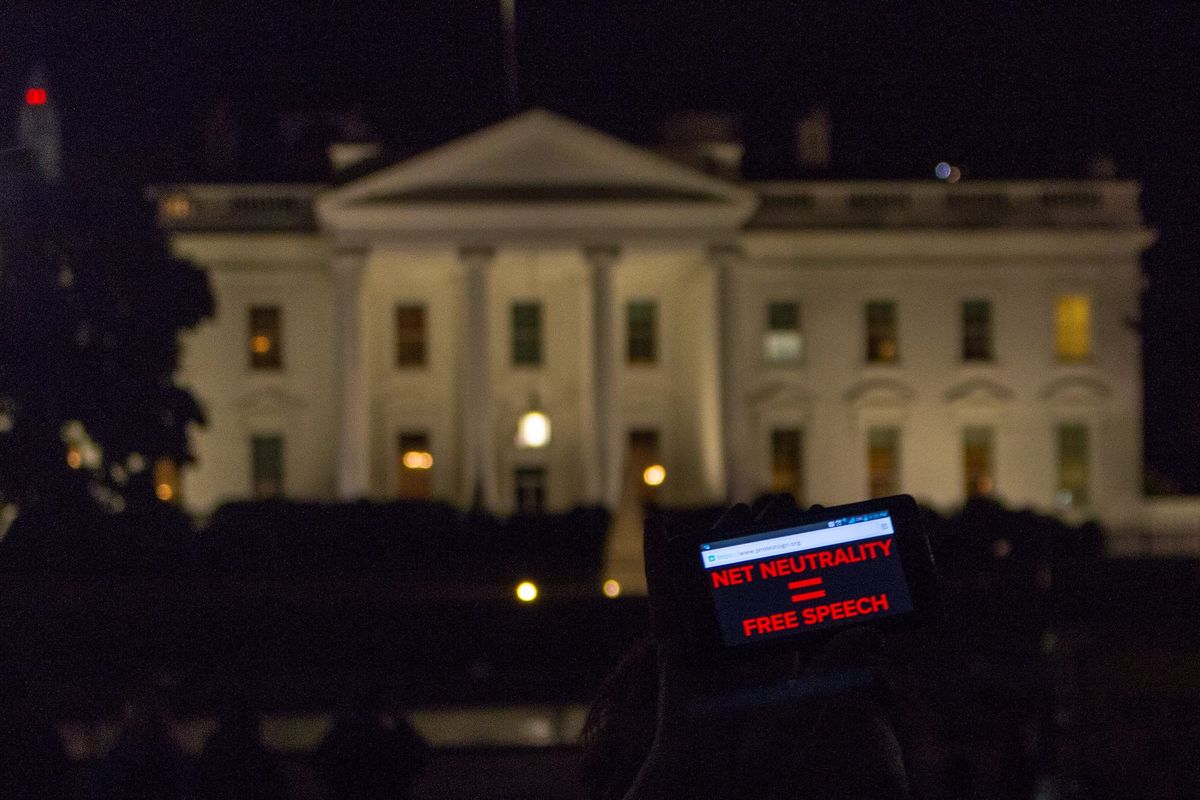
In advance of a full repeal, Trump’s FCC is undermining net neutrality.
The FCC will have to vote, but with the board’s two top Democrats gone, it’s almost a foregone conclusion that net neutrality’s days are numbered. They’ve already dropped inquiries into the practice of zero-rating, looked at askance by proponents of net neutrality who see the practice—in which a provider doesn’t count content from favored sites against a consumer’s data cap—as a prelude to the total teardown of net neutrality, T minus three months.
Toppling net neutrality is just part of the pro-corporate agenda Trump’s web regulators have in mind. They’re also likely to oppose efforts by municipalities to develop high-speed public networks and support consolidation by mega-merger.
Corporations will flourish while venture capitalists “freak out” that start-ups won’t be treated fairly.
↩︎ posted Feb. 21, 2017
Eliminating regulations essentially means ISPs can continue charging consumers for access to the internet while simultaneously charging institutions for prioritized access to those customers. This means any organization without deep enough pockets to pay an ISP’s ransom will load much slower than those with ties to ISPs.
Killing net neutrality would vastly strengthen the relationship between where you get your data and what you can surf.
↩︎ TechCrunch, posted Feb. 21, 2017
The future of the internet that net neutrality seeks to avoid is Apple’s walled garden on a larger scale: ISPs restricting content from users. If Trump-supporting Gab users believe that Apple is overstepping its bounds by moderating its app store too heavily, it’s not much of a leap to assume that they feel similarly about internet-service providers.
Repealing net neutrality may spawn backlash from the very trolls whose platforms the regulations protect.
↩︎ Select All, posted Feb. 21, 2017
A history of net neutrality, perhaps soon to be a forgotten concept.
↩︎ posted Feb. 21, 2017
In any way limiting the Lifeline program, at this moment in time, exacerbates the digital divide. It doesn’t address it in any positive way.
Trump’s new FCC chief immediately blocked some companies from participating in a program providing broadband to low-income families.
↩︎ Washington Post, posted Feb. 21, 2017
Mainstream civil rights orgs push for corporate telecoms—who happen to be their donors.
The NAACP, National Urban League, and others sent a letter to the FCC supporting the end of net neutrality. Other civil rights organizations say an end to net neutrality would enable discrimination and undermine the web as a platform for activism.
The civil rights group opposed to net neutrality have employed several arguments against the proposal. In one filing made in 2010, the NAACP signed onto an argument from MMTC that net neutrality reforms were a waste of resources because the FCC should focus on “more pressing racial discrimination and exclusionary hiring and promotion practices of certain Silicon Valley high-tech companies.” In a separate filing in 2014, MMTC and the NAACP argued that reclassification would threaten the “fragile state of minority engagement in the digital ecosystem.”
↩︎ posted Feb. 21, 2017
There’s a chip in your smartphone that lets you listen to FM radio, but turning it on is bad for corporate profits.
Your smartphone can actually pick up FM radio. Most US phones don’t have the chip turned on, but in Mexico 80 percent of smartphone users can get FM radio, which public-safety wonks love because it’s a reliable way to reach populations in an emergency.
Ajit Pai, Trump’s FCC chief, wants more companies to turn the chip on, but says he won’t force Apple or any other provider to do so. (They keep it off in hopes you’ll pay for Spotify or Apple Music.)
↩︎ posted Feb. 21, 2017