
How do you know a human’s nearby? Look for waste.
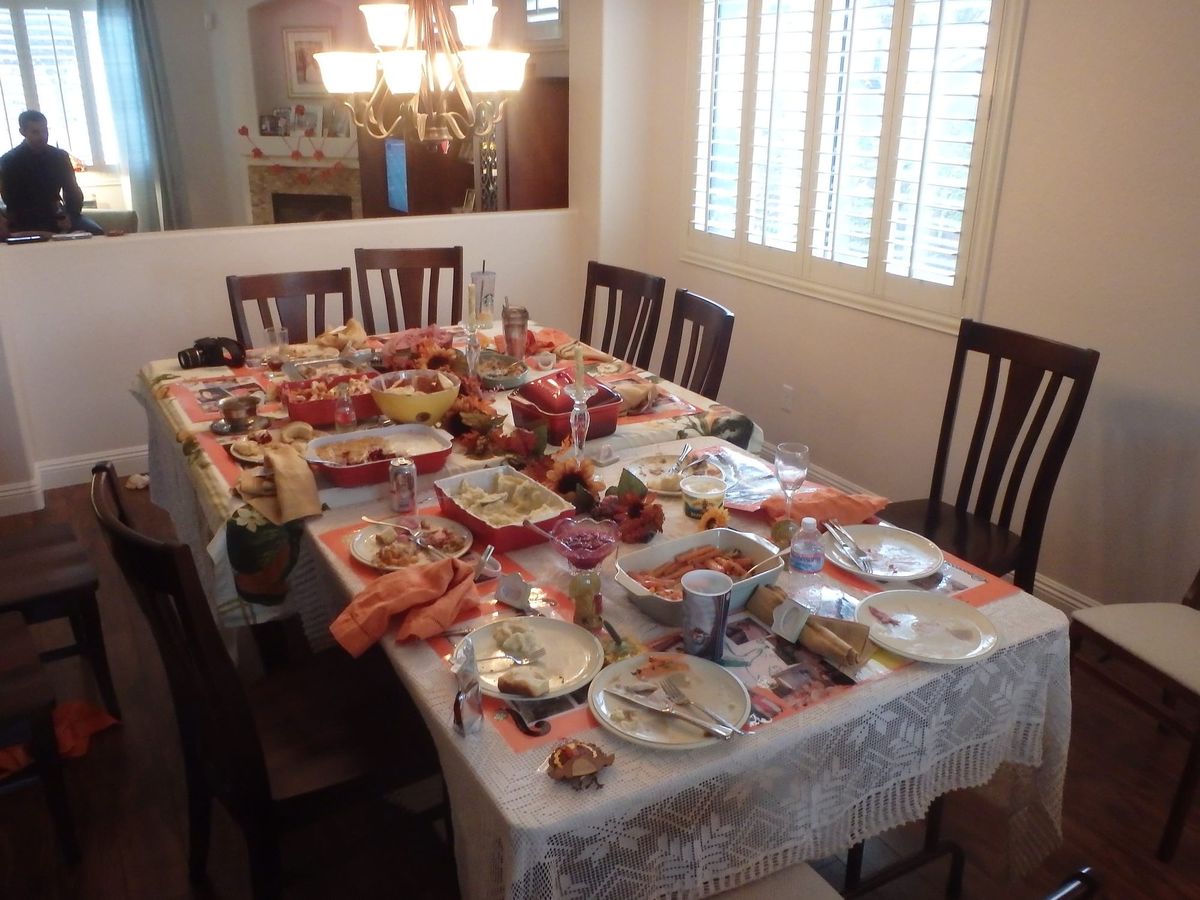
What is the difference between excess and waste?
Approximately 204 million pounds of turkey were expected to be discarded this Thanksgiving, which could cost the country’s sanitation departments up to $293 million.
It costs even more money to cultivate turkeys in the first place—the carbon equivalent of driving across the country 800,000 times. Please take advantage of food media’s busiest season and do something with those leftovers. Here are ideas from Southern Living, The Kitchn, Food52, The Daily Meal, and Bon Apettit.
↩︎ posted Nov. 30, 2016
There are approximately 40,000 pieces of junk left in space by astronauts, some of which may forbode ill for Earth.
↩︎ posted Nov. 28, 2016
From zero to 10 cents to none
California was the first state to charge customers 10 cents for plastic bags, and now it is the first state to ban single-use plastic bags completely. The decision is a result of a referendum, in which 52% of people voted “bag, bye.”
↩︎ posted Nov. 14, 2016
Gabrielle Nevitt remembers the first time she noticed the smell. It was sometime in the early 1980s and she was an undergraduate, heading out to sea on a research trip. “Hey, can you smell it?” a fisherman said to her. “It smells like a productive area for fishing.”
“I shall kill no albatross”? Actually, we might have already. Algae that grow on plastics we throw in the ocean release an alluring, “kinda seaweed-y” scent of DMS (dimethyl sulfide). Then sea birds mistakenly eat the plastic.
↩︎ The Atlantic, posted Nov. 11, 2016
Making food waste a thing of the past
Hyperspectral imaging, which analyzes the tenderness of meat or ripeness of fruits, could stop large amounts of food from being tossed out at restaurants. And if Silicon Valley can turn it into an app, then home cooks can benefit as well. A similar technology could be used to scan people’s retinas to detect Alzheimer’s disease, or examine oil rigs for dangerous gasses.
↩︎ posted Nov. 3, 2016
Climate change is often going to be the domino that falls. But that does not mean we can ignore the rest of the dominos in the row.
Blaming climate change for natural disasters like the Chennai floods—or even the situation in Syria—alleviates responsibility on the part of lawmakers. It is a convenient way to avoid employing policies and infrastructure that will benefit citizens.
↩︎ Slate, posted Nov. 3, 2016
Thanks to “fast fashion,” people are disposing of clothes twice as fast
Americans toss 14 million tons of used, unwanted clothing per year, most of which go into landfills or incinerators. This includes donated clothes, which are often bypassed by charities
because there are just too many clothes and most of them are poorly-made items that are not meant to last. Fast fashion’s model of putting new styles up almost weekly is resulting in people disposing those clothes at double the speed, making us all move quickly towards an environmental disaster. (And no, the continent of Africa does not want your year-old Forever 21 crop top.)
↩︎ posted Oct. 12, 2016
Oktoberfest garbage can be turned into a Nike Store, and cigarette butts can become high-design chairs. Engineer Arthur Huang goes through the basics of up-cycling trash.
↩︎ posted Oct. 12, 2016
Then, I saw it: Lebanon’s new ski slope. But instead of freshly fallen snow, the white hill was made of garbage bags, extending for several hundred meters along the Jdeideh bridge.”
AFP photographer Joseph Eid documents heaping piles of garbage in Beirut, where government inefficiency to clean the streets has resulted in apathy and dark humor among city dwellers.
↩︎ AFP, posted Oct. 12, 2016
Stinky trees do great in urban environments
Cities plant stinky female gingkgoes—comparable to the odor of vomit or dirty socks—because they can withstand the pollution of dense urban areas for hundreds of years; many other trees barely last a decade. One surprising note: “It turns out the ginkgo, like some species of fish, can spontaneously change sex. This evolutionary adaptation allows ginkgoes to propagate when the sex ratio is imbalanced.”
↩︎ posted Oct. 12, 2016
Destruction becomes eclectic
A new way to understand climate change? Translate empirical data into sheet music. This composition depicts sound of climate change in Alaska’s yellow cedar forests. “Each note in the piece is a single tree from the study site, while its pitch conveys the age and loudness conveys its size.”
↩︎ posted Oct. 12, 2016