
Willie & Joe: The WWII Years
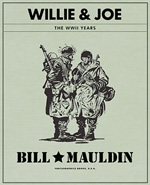
Cartoonists have struggled in the American culture for their rightful seat at the big arts banquet of popular culture—the big shift in their legitimacy can probably be pegged to Art Spiegelman’s Pulitzer Prize-winning graphic novel Maus in the late ’80s. Back in the mid-20th century, parents who were even more clueless (but less lethally so) than today’s breeders scorned DC and Marvel comics and reviled Mad magazine; some even theorized that the books were contributors to the big scare of the ’50s: juvenile delinquency. There were exceptions to the rule: cartoonists such as those found on the op-ed pages of then-flourishing daily newspapers such as the inimitable Herblock and Bill Mauldin.
Mauldin, who had a long and fruitful career as a political cartoonist (“If it’s big,” he used to say, “hit it.”), collecting two Pulitzer Prizes along the way, was well accounted for in Todd DePastino’s biography Bill Mauldin: A Life Up Front. Beginning his life’s work for the Army and some civilian publications, he created the characters Willie and Joe to portray what seemingly no other medium was able to capture: the daily lives of infantry grunts in combat zones. DePastino has now edited a wonderful two-volume slipcased anthology of more than 600 of those cartoons in Willie & Joe: The WWII Years.
None other than venerable caricaturist David Levine has lavished this praise on Mauldin: “I think of Mauldin as one of the great anti-war artists, much like Goya. He took drawing up to a communicative level that I think is extraordinary.” Another of Mauldin’s peers, Jules Feiffer recalls:
The New YorkerThe New Yorker