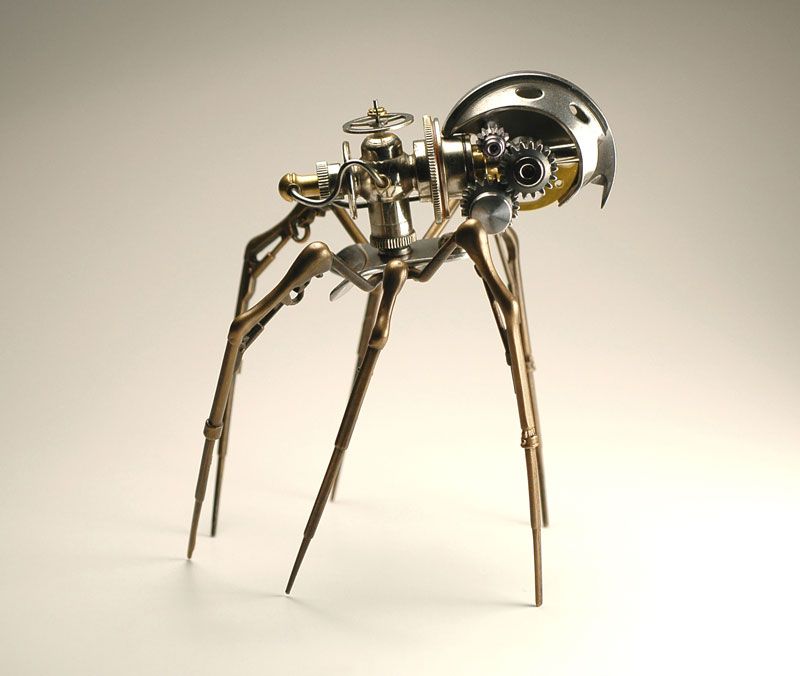
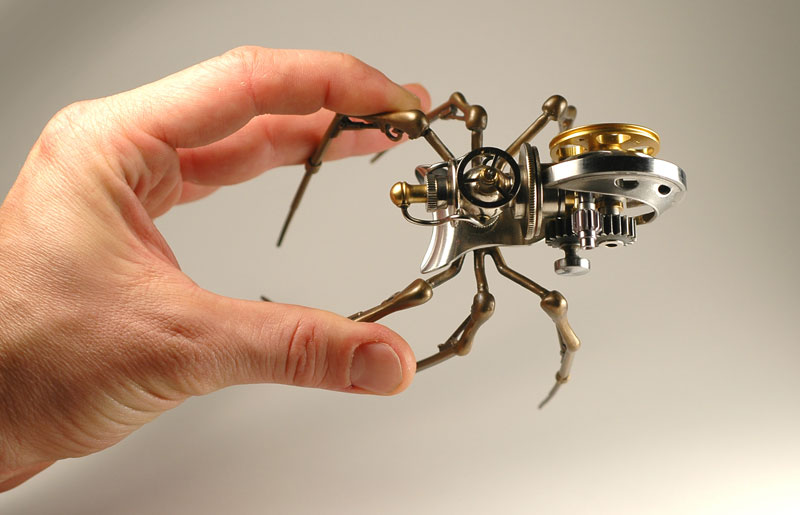
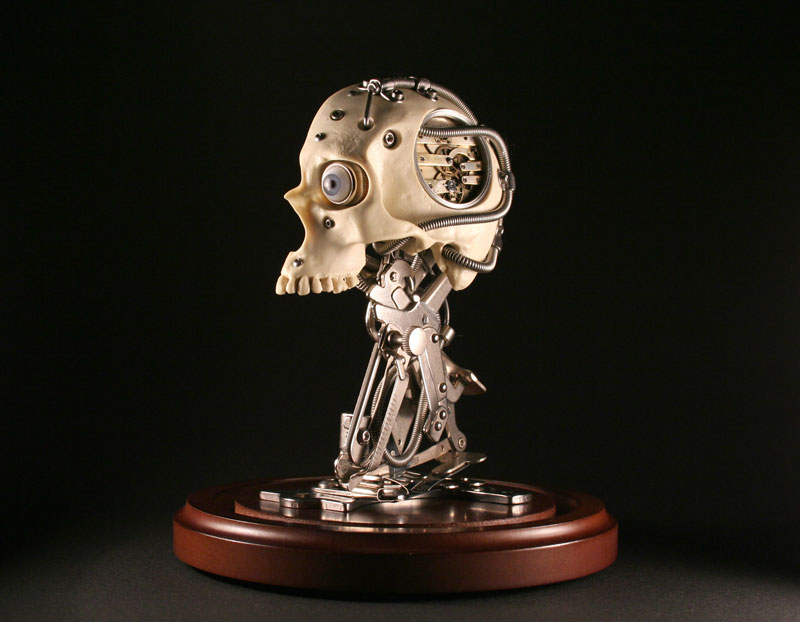
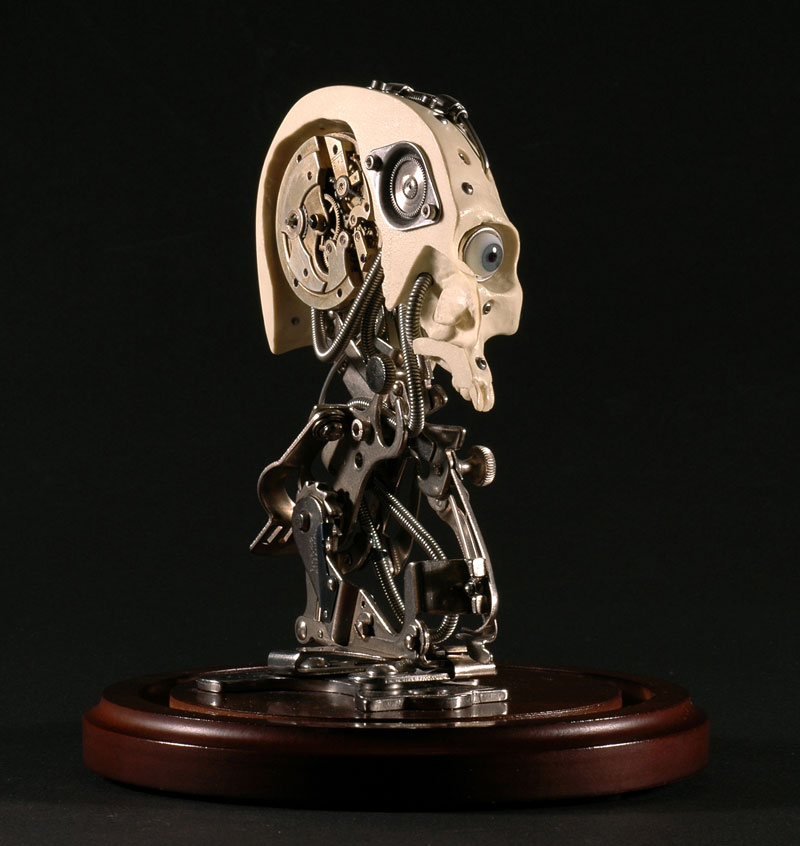
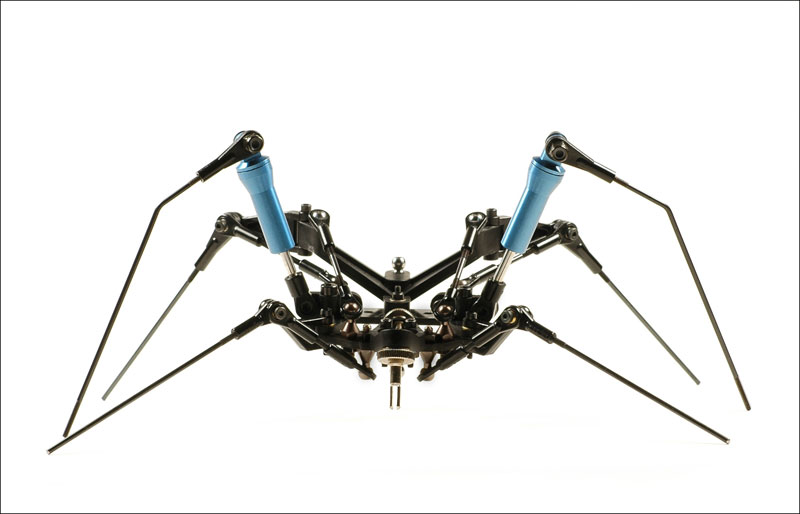
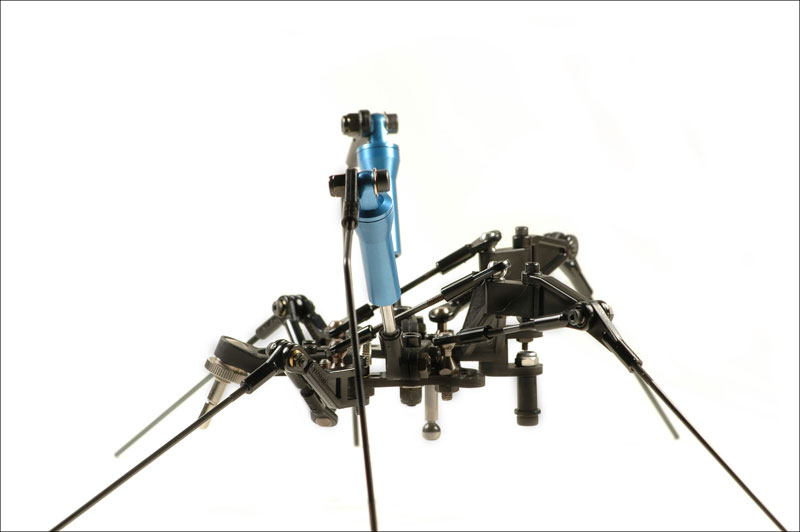
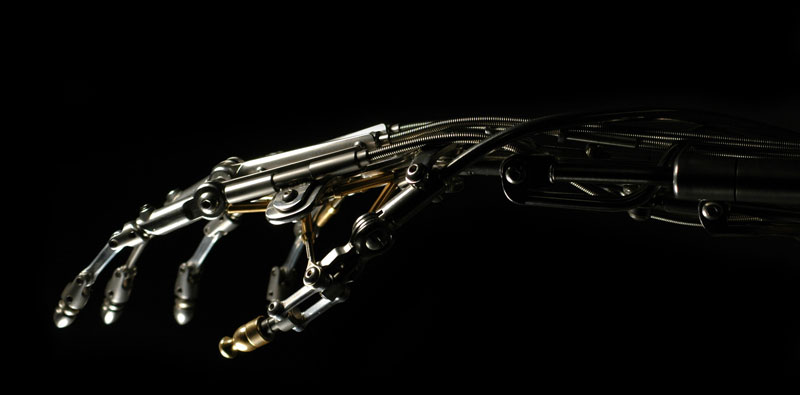
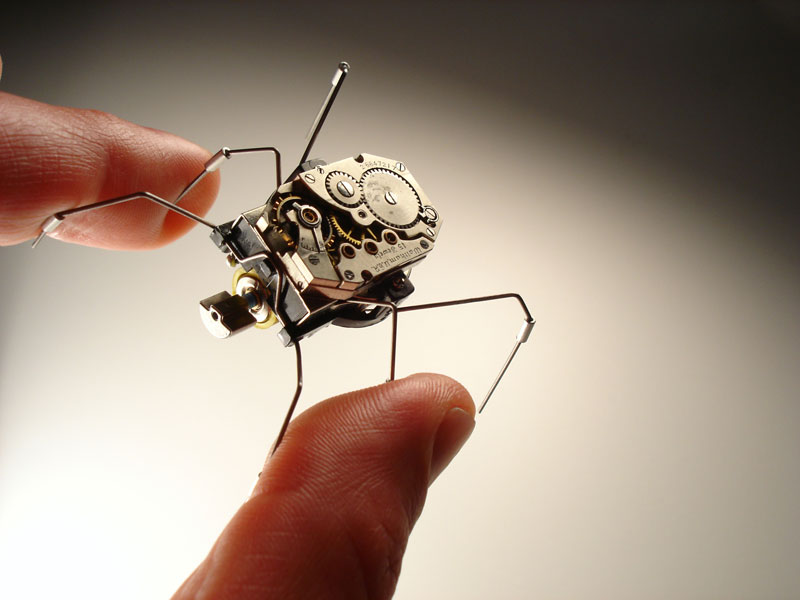
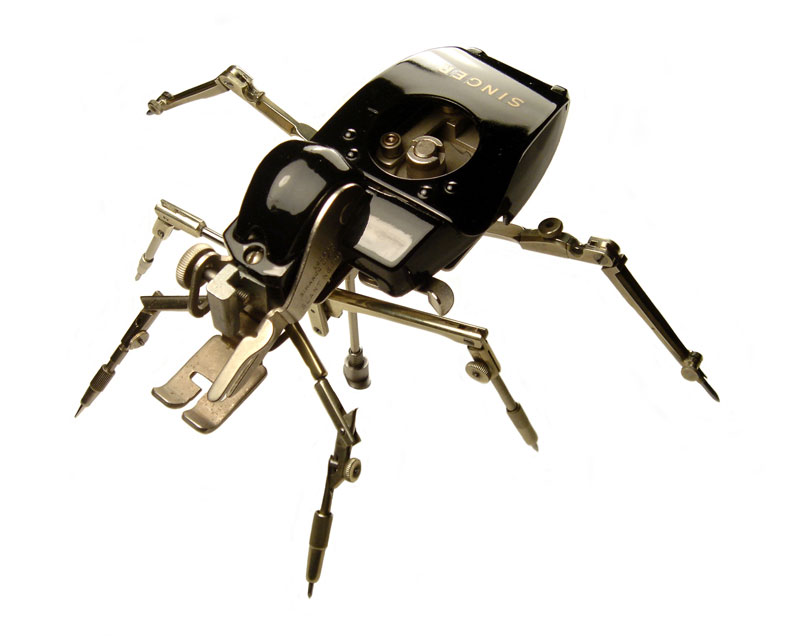
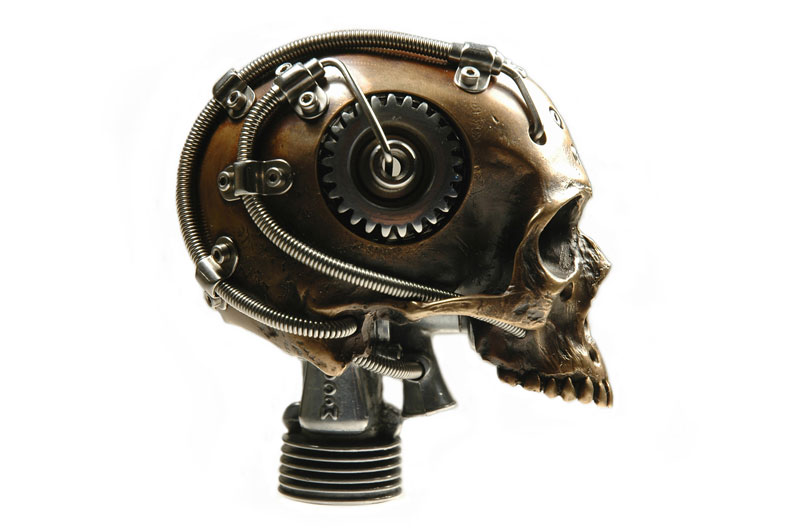
Robots and androids aren’t the sole property of science fiction. Christopher Conte’s sculptures are more like old-fashioned studies rendered with today’s materials: anatomical forms on the verge of motion. You can picture them crawling around the next Star Trek movie, or under a jar in a medical curiosities museum.
After earning a BFA from Pratt Institute, Conte entered the prosthetics field and began making artificial limbs for amputees in New York, which he still does to this day. His sculptures have been recently used by The Discovery Channel and MTV Networks. All images copyright © Christopher Conte, all rights reserved. All images appear courtesy the artist.
How did you begin making these types of sculptures?
I began making the transition from painting and drawing to three-dimensional work during my time at Pratt. While still an illustration major, I started building robotic-inspired sculptures in my free time. I then began to use this method for my assignments. My instructors were very supportive of this switch and saw no reason why sculpture couldn’t serve to illustrate an idea. With that support I was building only sculptures by my senior year.
Do you find yourself more inspired by natural forms or the materials you work with?
They both play a huge role. Without question, natural forms like those found in insects, for example, usually start the ball rolling for me. From there I set out to hunt down parts and materials which lend themselves well to that aesthetic.
For all their technical aspects, your sculptures have an older feeling for me—more antiquarian and mechanical than techno or Chris Cunningham. Do you see yourself working in a certain school or approach?
While I’m no stranger to Chris Cunningham’s work (I find it quite wonderful), my approach comes mainly from a natural love for antiquities. Hunting places like flea markets and antique shops helped me develop a great appreciation for these artifacts while wanting to capture their appeal in my own work.
Was Thomas Edison much of an artist?
Not in a traditional sense, no. But if you look at Edison’s philosophy, his approach captured what drives creative thinking. Take for example this quote by Edison, “Restlessness and discontent are the first necessities of progress.” Or this, “If we did all the things we are capable of doing, we would literally astonish ourselves.” These are words artists like myself can live by.
Do all of your sculptures “work” in terms of operation?
Most of them do not actually move on their own. Many are articulated to some degree. What’s more important to me is expressing movement to the viewer without the physical need for movement.
What are you working on next?
I’ve been developing several insect prototypes which use programmable microprocessors to control their movement. This is something you might see more of in my work in the very near future.