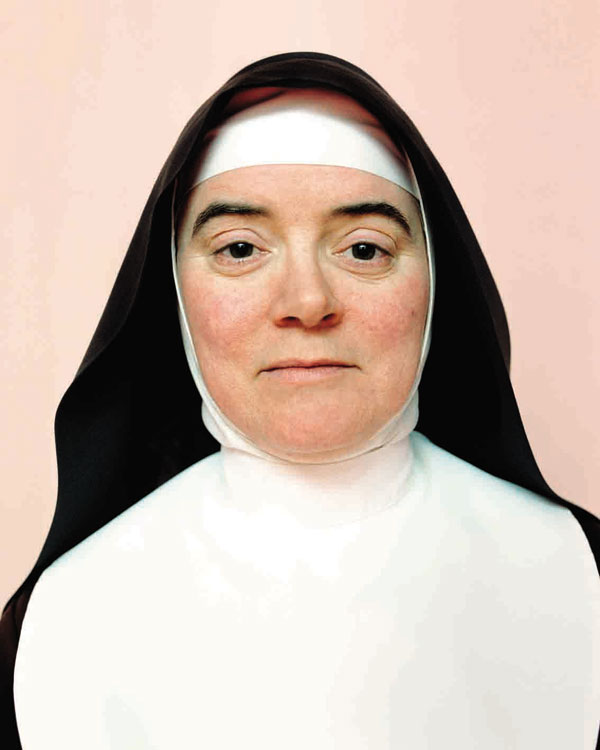
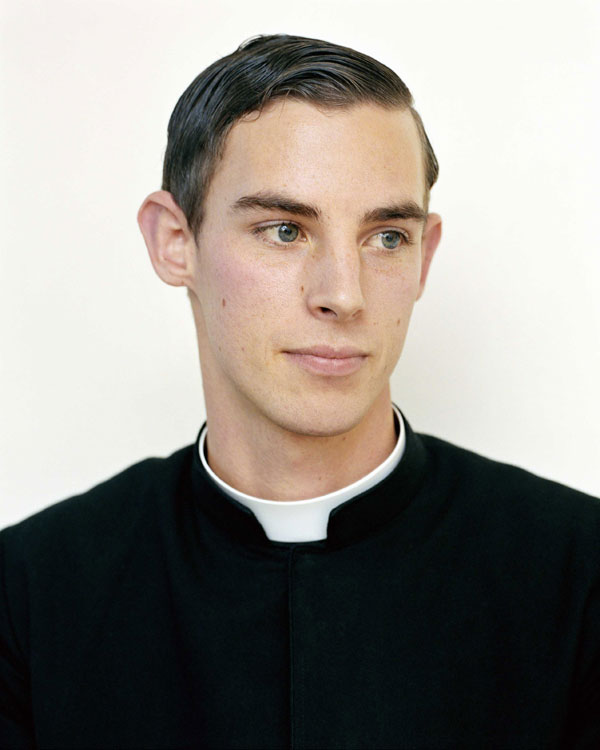
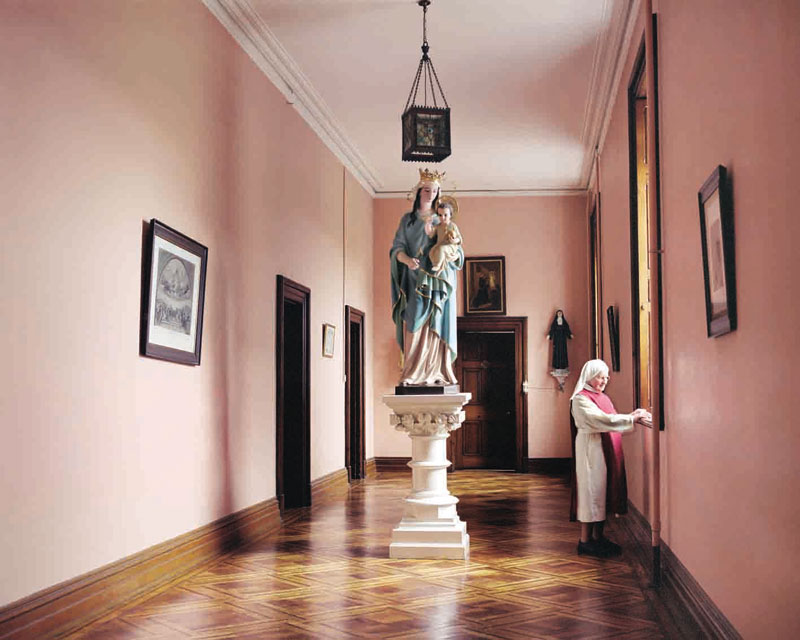
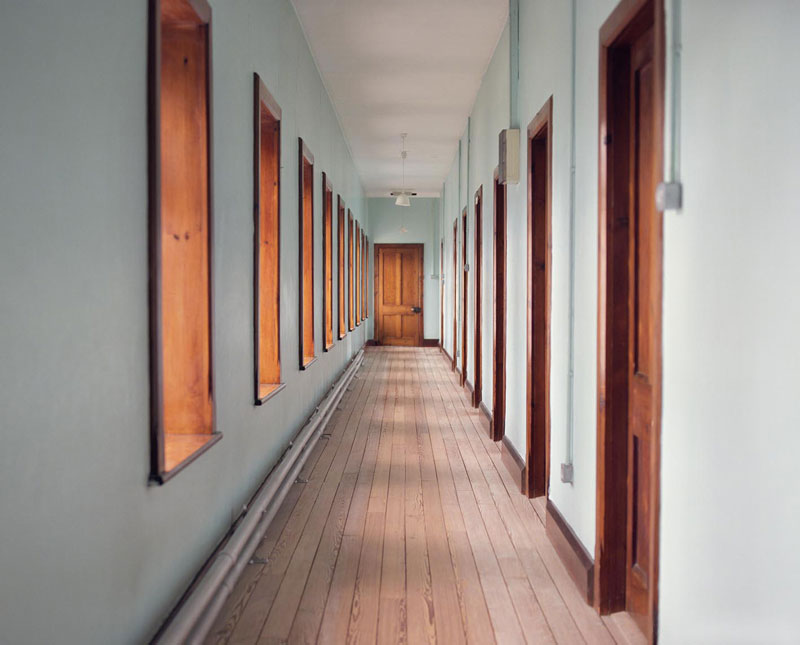
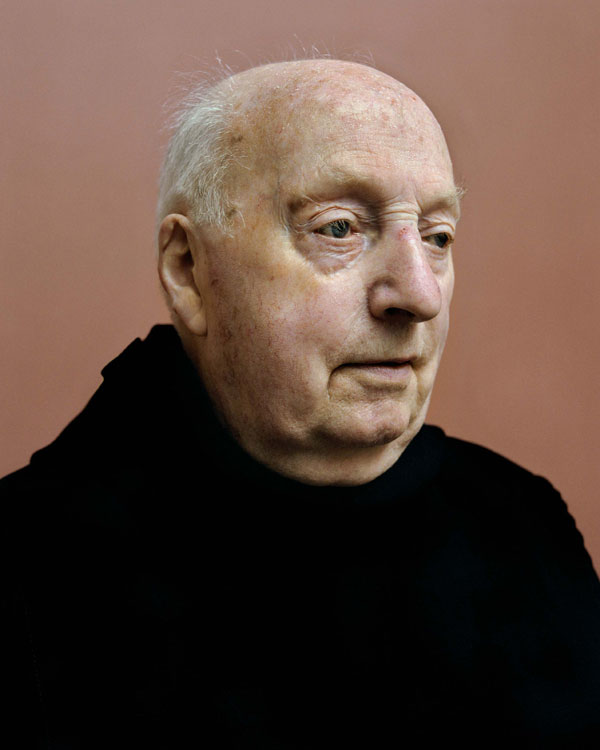
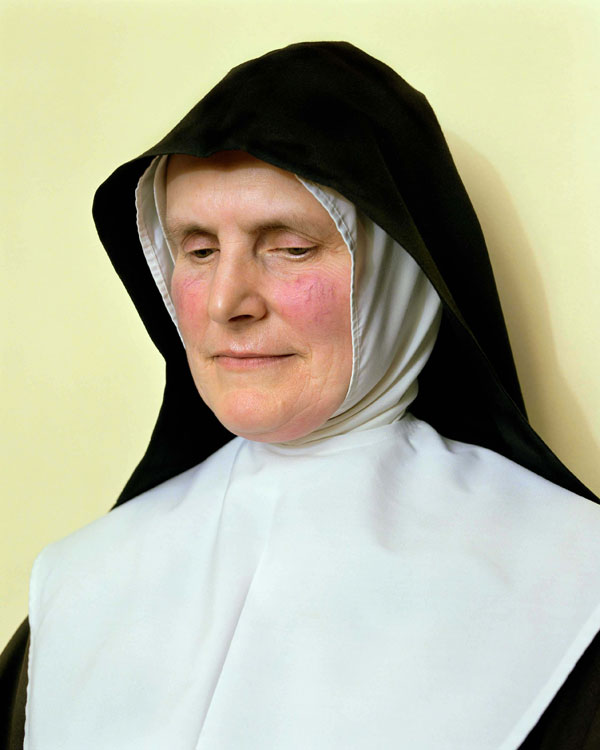
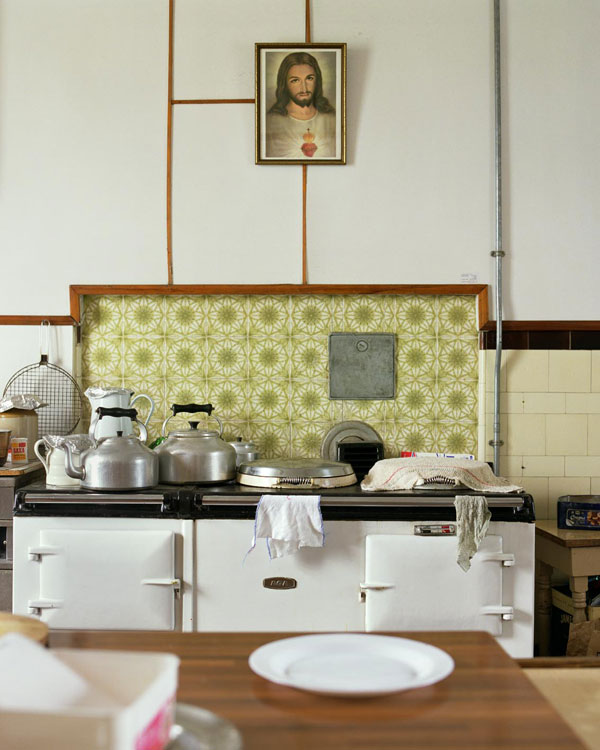
Religious nuts make the front page each morning, but there are still plenty of believers quietly practicing their faith without violence or politiking. Photographer Jackie Nickerson’s new show and book, Faith goes behind the doors of some of Ireland’s most private Catholic communities, and finds ordinary people, living in today’s world, quietly going about their business.
“Faith” is up at the Jack Shainman Gallery now through November 10, 2007. Nickerson is a fine art photographer who has lived and worked in London and New York. In September 2002, Jonathan Cape (Random House) published Farm, a book of her portraits of farm workers taken all over southern Africa. SteidlMack will publish “Faith” in November 2007. She has been shortlisted for the John Kobel prize and nominated for the Becks Futures Award. She is represented by the Jack Shainman Gallery in New York.
All images courtesy of Jack Shainman Gallery. All images © Jackie Nickerson, all rights reserved.
First off, are you Catholic yourself?
No, I’m not a Catholic.
How did you get access to what I imagine are rather cloistered spaces?
I spent three years traveling around Southern Africa taking pictures of farm workers and the resulting work was a book called Farm, published in 2002. A lot of the religious are missionaries or have missions in Africa. I would show them the book and they could see that it was real and about real people and they could relate to that. Farm is a book about the dignity of the individual without reference to possession. That’s really what got me in there. Plus lots of conversations and cups of tea and biscuits. I did get into some of the strictest kinds of environments: the Carmelites and the Poor Clares. One nun said to me, “we had to have a look at you to see if you were dangerous”. It was tongue-in-cheek but I don’t think they’re anybody’s fool.
Were there any different feelings for yourself, shooting a priest or a nun instead of someone outside the church?
When you enter an environment that you’re unfamiliar with then you always should try to educate yourself about the protocol of that place. As a photographer, you are often in strange or unfamiliar places, and this was no different. So, no, it didn’t make any difference that they were priests and nuns. You have to remember, they’re just ordinary people.
What were some common traits you found emerging from the portraits?
These are all portraits of individual people. I try to take pictures of people as they are. It’s important to try to see who’s in front of you and who they are right now. There was a huge diversity of people who sat for me so it would be difficult to say that I saw any common trait emerging.
The history of Irish Catholicism has many turns through violence, passion, independence, sacrifice, famine. Not much of that seems to appear here—should it?
What you see in these photographs is the here and now, what exists today. These are real people who are living now, in today’s world. The environments are as you would see them today if you were to visit those places. However, it’s impossible for an Irish person not to be informed by their history. But whether you can see all that is a matter of personal opinion. If you don’t have the knowledge of the history of the image you’re looking at then it’s actually nearly impossible to “see” history unless there’s a written reference. For instance, if you look at a picture of a block of wood then to most people it’s a block of wood. If someone tells you that a hundred people have had their heads chopped off on it then it takes on a different meaning completely. I think many Irish people would see their history in these images.
Did you find any personal sense of faith affected by shooting these pictures?
When you spend so much time, as I did, with people of faith, then of course it does make you address your own spiritual questions.
What are you working on now?
I’m working on a series that explores the concepts of home and place.