
And Fay
Artist William Wegman is something of a polymath (polyart?). His works span from paintings and drawings, to conceptual videos, to photographs of his Weimaraner dogs.
Intro by Nozlee Samadzadeh
Artist William Wegman is something of a polymath (polyart?). His works span from paintings and drawings (as he told 20x200, “I have a habit of making drawings of just about anything”), to conceptual videos (titles like “Dog Biscuit in Glass Jar” are as explanatory as the films’ effects are memorable), to photographs of his Weimaraner dogs (as seen in museums and on Sesame Street alike). Continue reading ↓
“William Wegman and Fay” is on view at Senior & Shopmaker Gallery through Dec. 24, 2010. All images courtesy the artist, all rights reserved.
Intro continued
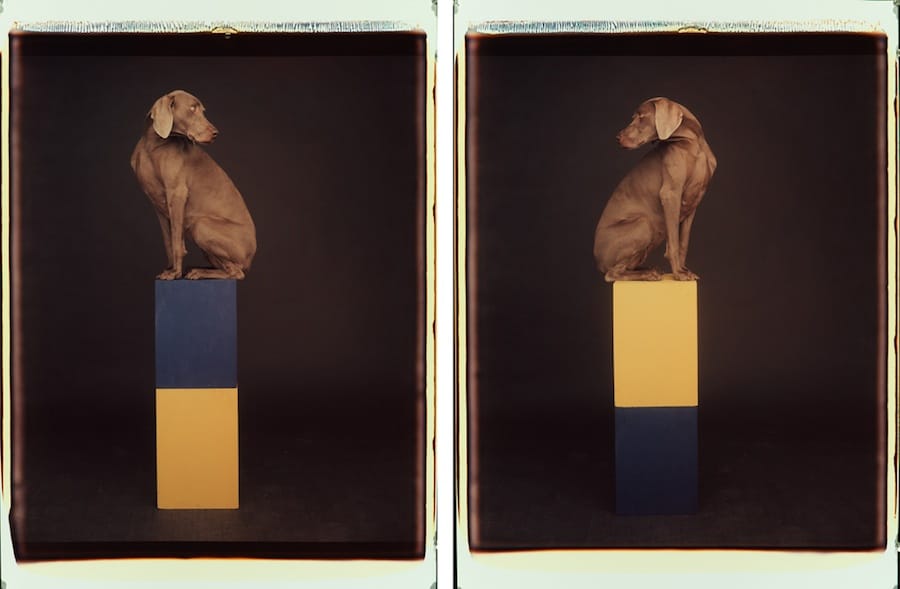
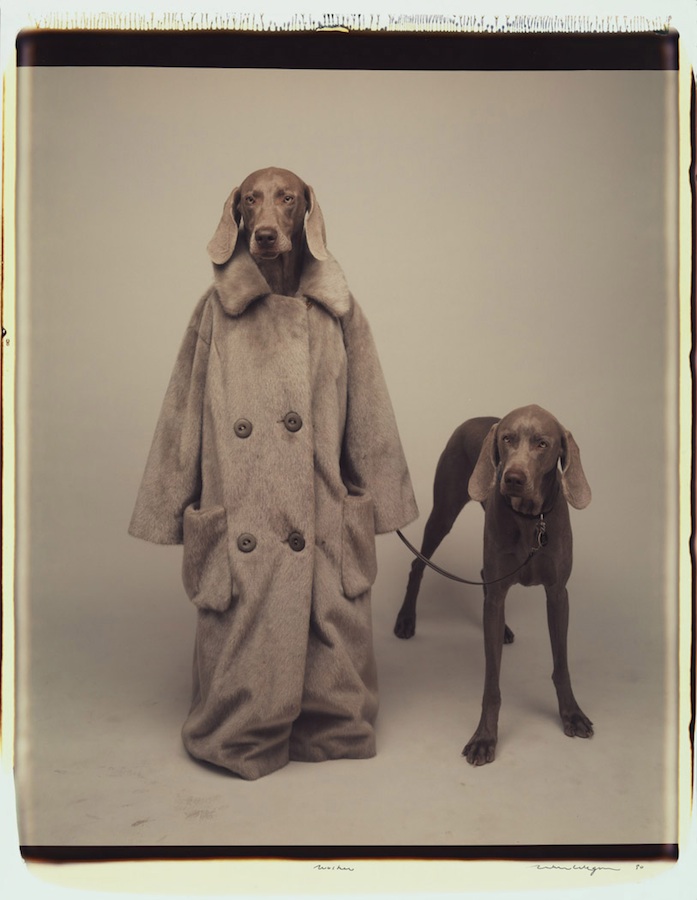
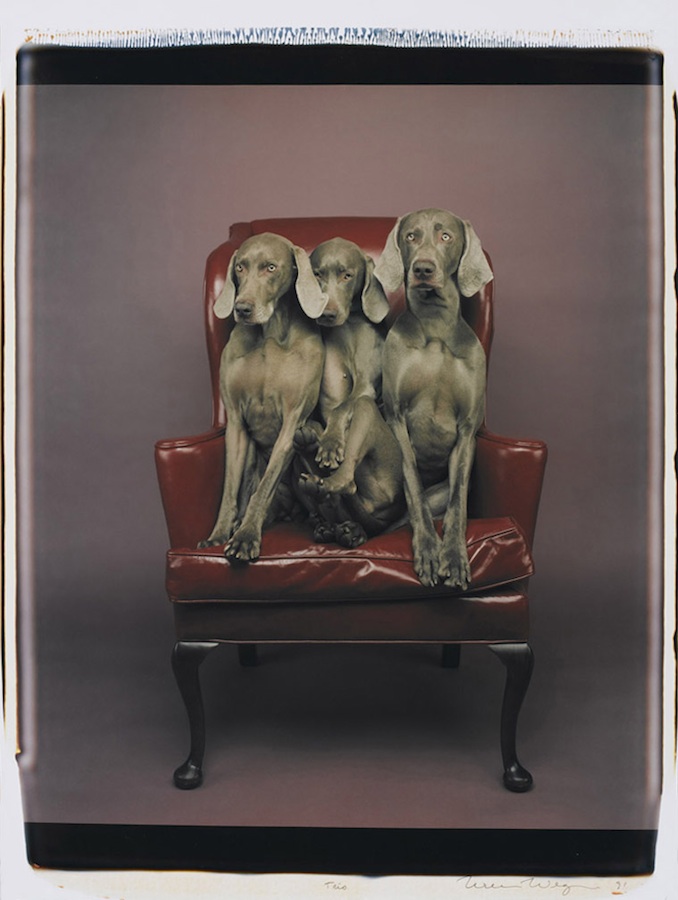
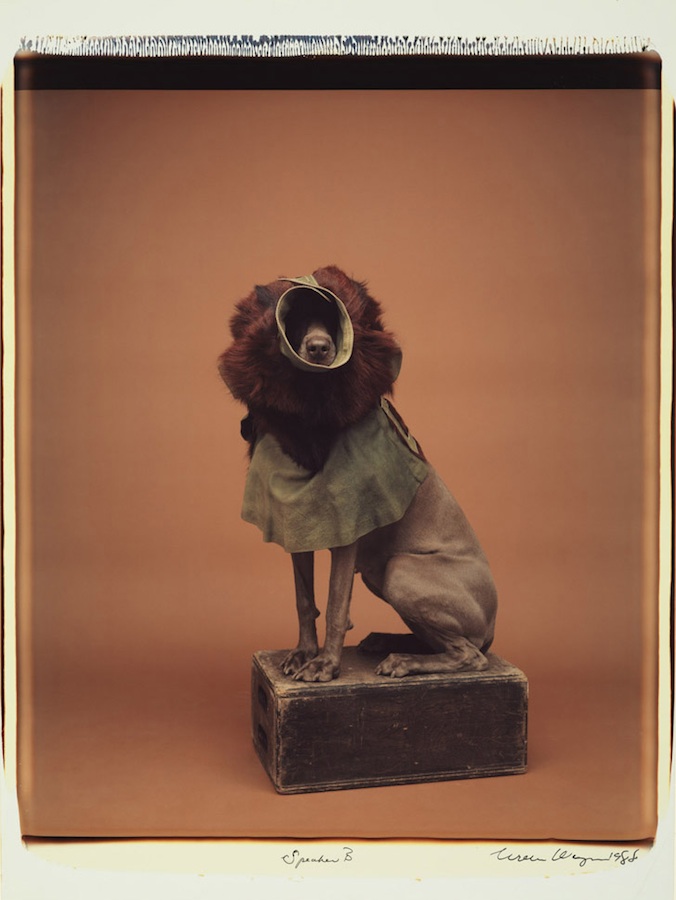
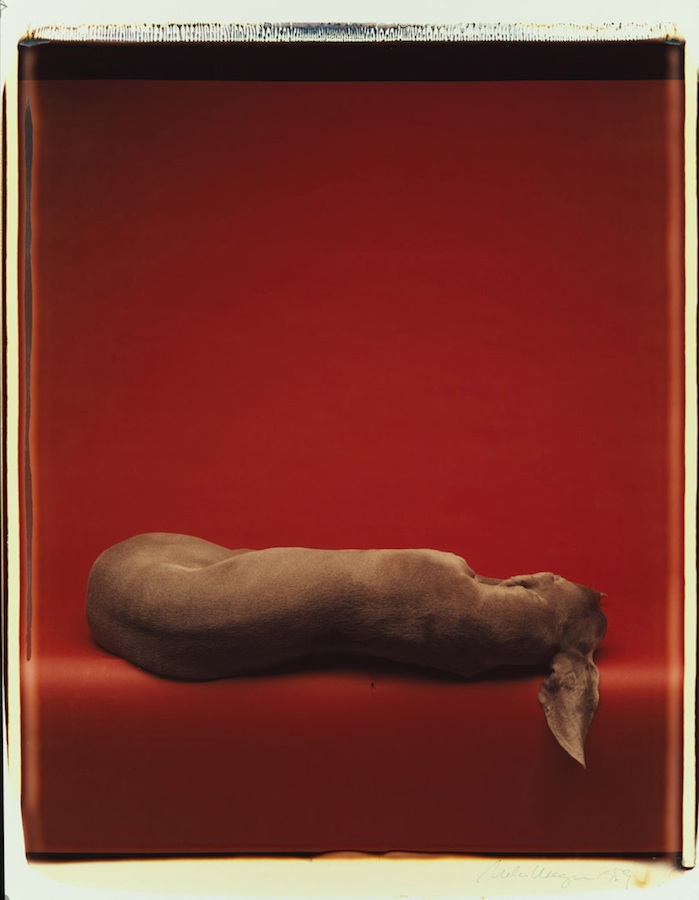
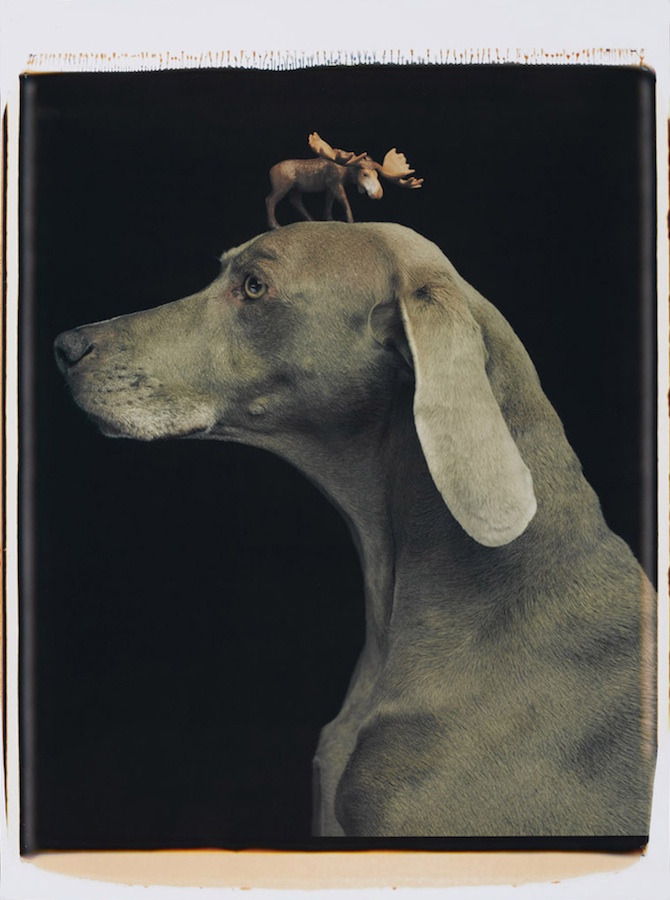
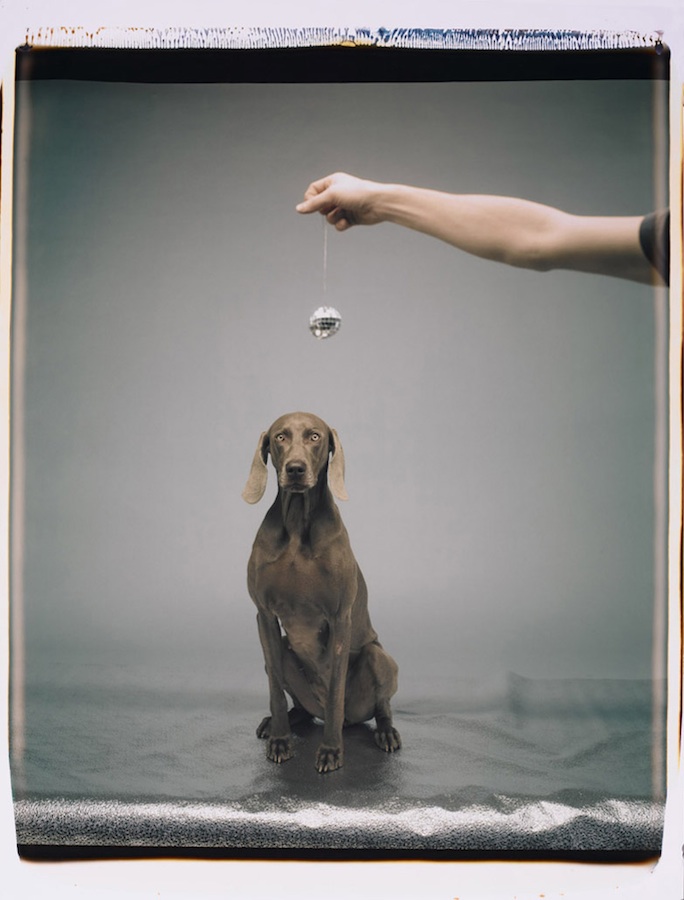
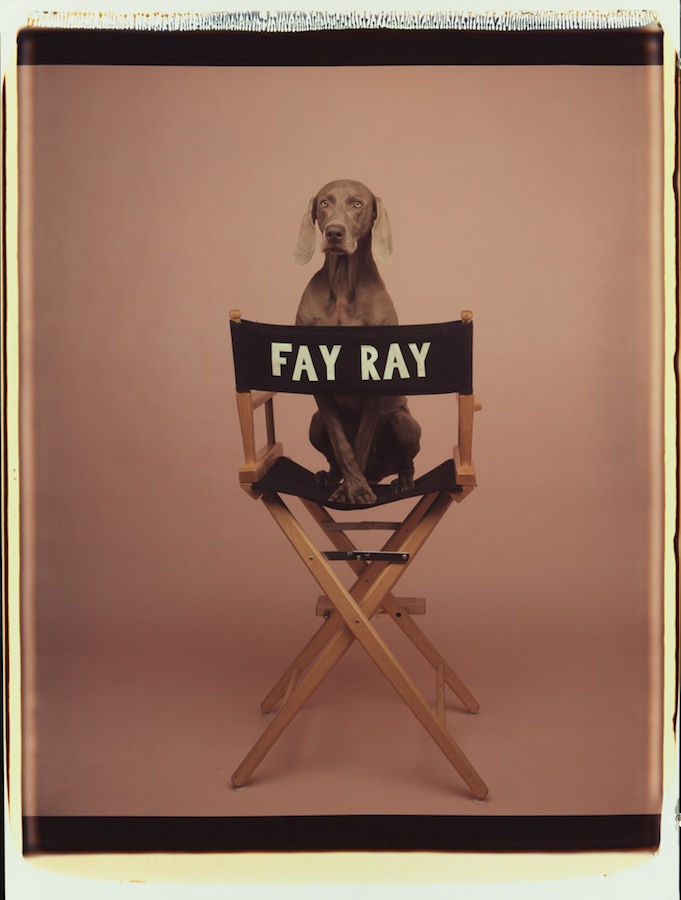
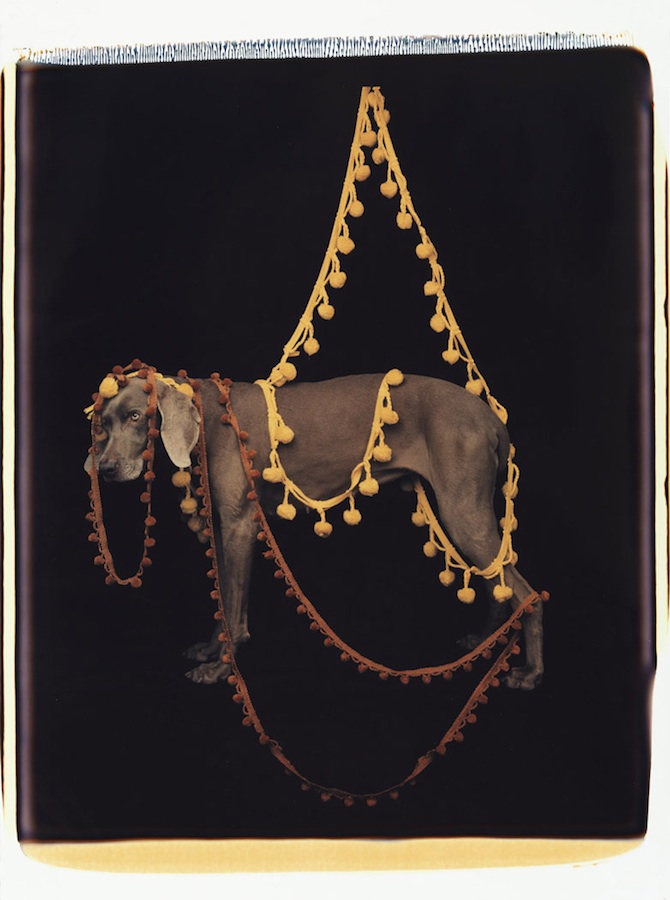
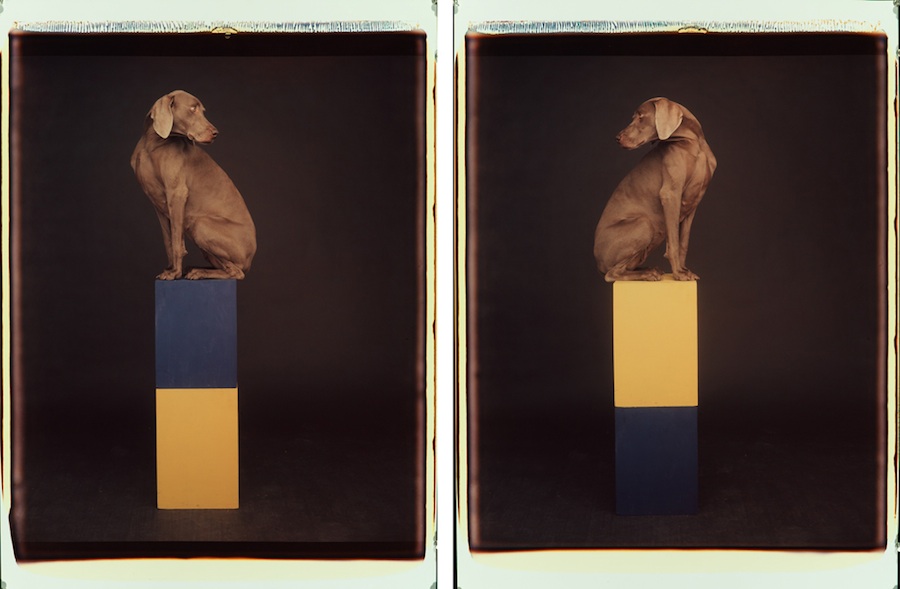
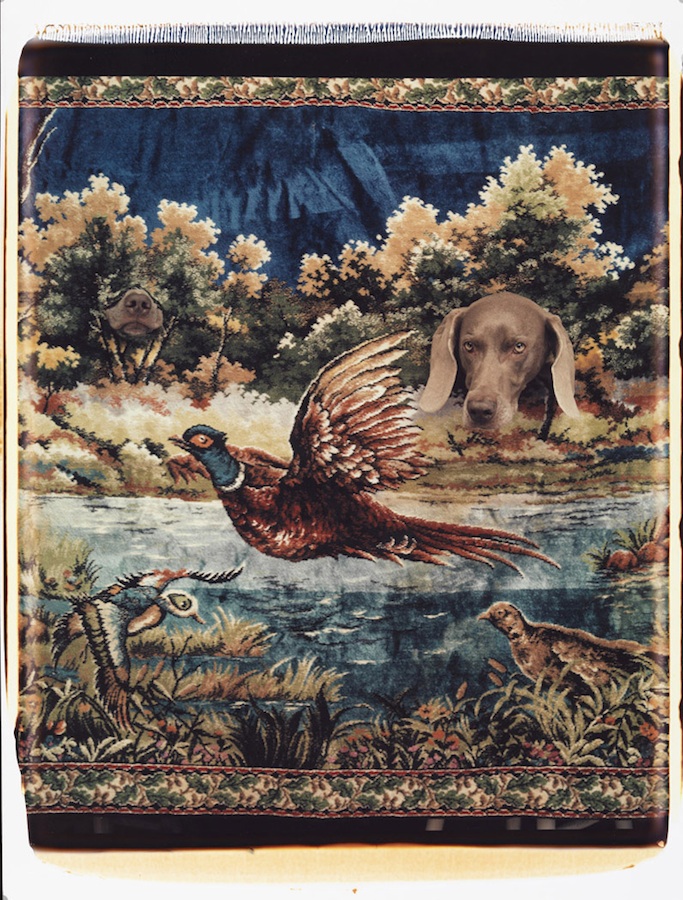
“William Wegman and Fay” is a collection of the latter genre: never-before-seen, 20" by 24" large-format Polaroids of Wegman’s Weimaraner Fay Ray, dating from 1987 to 1995. Wegman told me how, when his assistant discovered a stack of forgotten Polaroids in a warehouse, the idea for the exhibit was born: “You think of 35mm film, you take 20 or 30 photos on a roll and barely look at any of them. I did the same thing with Polaroids—I was producing so many per week that most of them went straight into storage.”
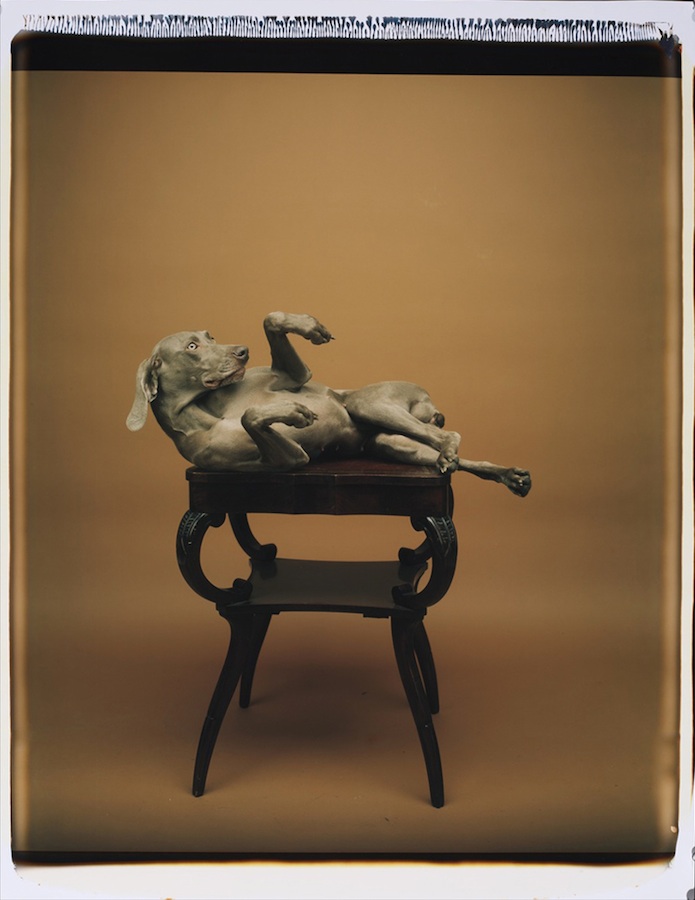
With help from Polaroid employees during short, weekly sessions, Wegman operated a giant camera (see it here) to photograph Fay in a variety of poses. The limitation of the 20" by 24" canvas was a welcome challenge, Wegman said, as he was forced to think of innovative ways to raise Fay to the camera’s eye level. She was as much part of the artistic process as he was: “Anyone who ever met Fay knew how special she was, you could really see it in her eyes. I always had to think of new and better poses, or you could tell she would get bored. I’d always be looking for new props to use with her and tables for her to stand on. She was really something special.”
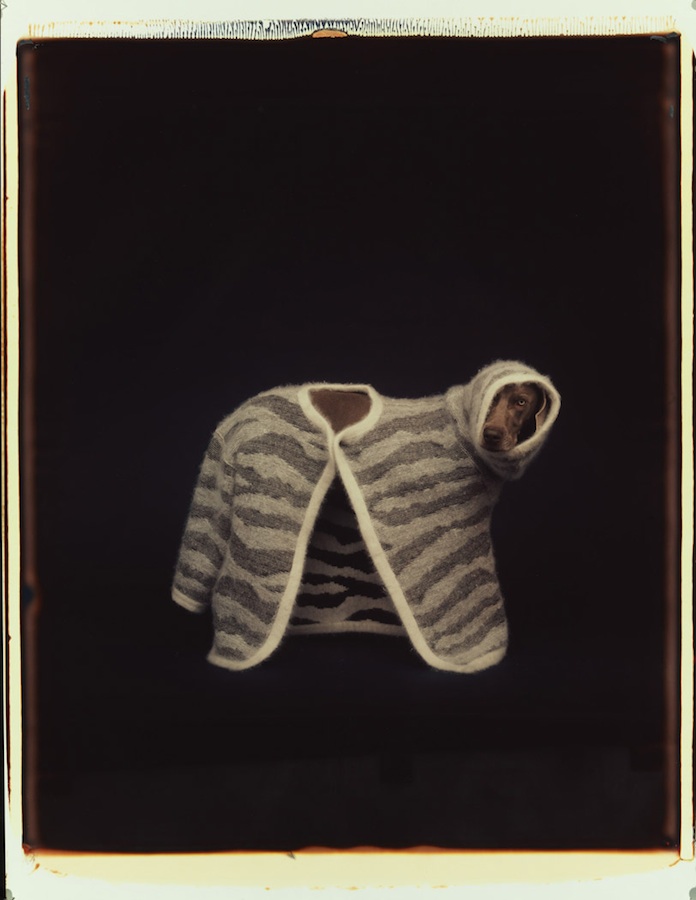
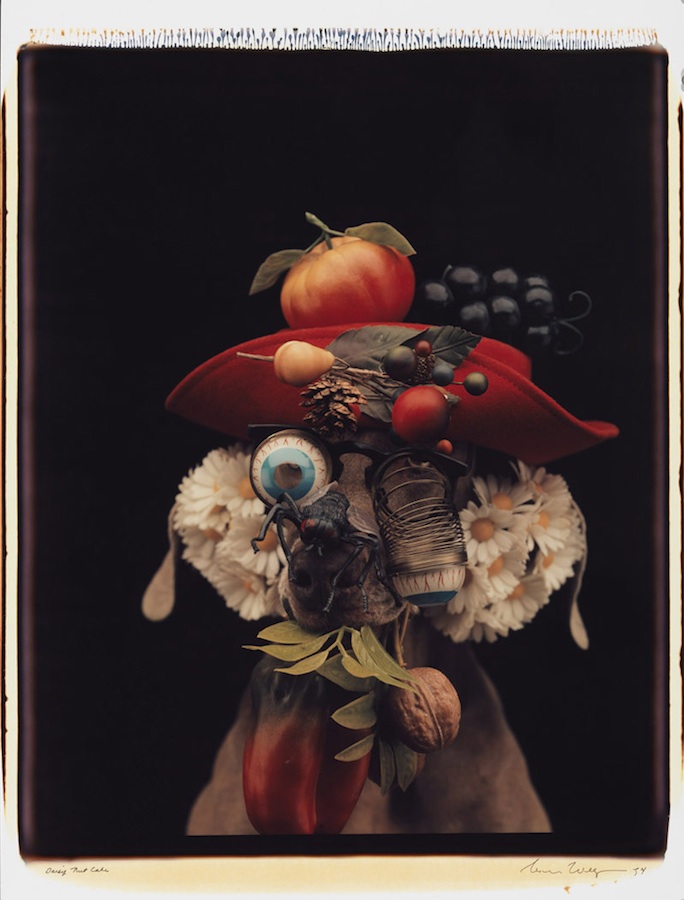
The photos are gorgeous: The simplicity of “Entabled” brings to mind classical Greek nudes, while “Daisy Nut Cake” looks like something Picasso might have made. Fay’s grace suffuses the photographs with an unexpected dignity. For example, she transforms “Zebra” from a photo of a dog in a cardigan to an abstract piece that contrasts animals dressed as humans with animals dressed as other animals.
Wegman’s signature tendency to switch between media has been complicated by the advent of digital photography. He says, “The thing about switching to digital is that you can shoot things however you like. With the Polaroid, I had to elevate Fay to eye level to make a fixed-size image. Now there’s almost too much choice, between the size of the image, the composition, everything.” But he’s enthusiastic about the way modern technology is making art more available, as seen with the recent DVD release of his video works and his collaboration with 20x200.
That’s not to say Wegman will be abandoning more traditional styles , such as painting. “It’s been good to go back to painting,” he said. “In a way it’s the opposite of photography: instead of creating the work in one twenty-fifth of a second, you’re creating it from the ground up, layer by layer.”
In a way, the entirety of Wegman’s career has been about those layers, about the fluidity of slipping from paintbrush to pencil to camera, and how those artworks influence and build upon each other.