
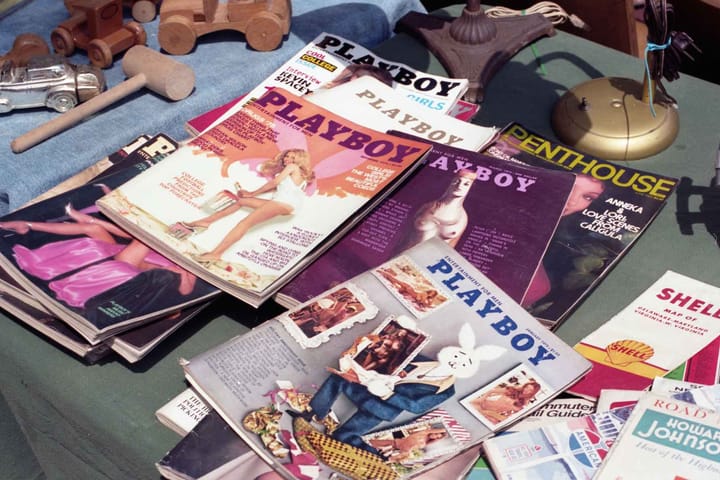
Playboy at War
With no more nudes in Playboy, an intimate approach toward sex is being lost—one longed for by soldiers in war zones.
With no more nudes in Playboy, an intimate approach toward sex is being lost—one longed for by soldiers in war zones.
Magazine publishing is a dark art. But the world of niche publishing—people who create magazines for necrophiliacs or donkey hobbyists, or for those of us who like to ride really small trains—features its own requirements.
In line at the grocery store, the economics of online writing.
For a hopeful magazine editor stuck in the wrong career, when Playgirl comes a-calling, it looks like the answer to her prayers—but not everything is as it seems. An excerpt from the new memoir “How to Be a Playgirl.”
Every day, rejections from lit mags flood the inboxes of thousands of writers the world over. Today, one writer changes all that.
I’ve spent my life complaining and arguing and telling stories about the city I came from. Then I changed—but it did, too.
Full disclosure: I started reading The Week, a weekly recap of news and opinion, after I contributed a short piece last year and they signed me up for a complimentary subscription. I quickly became addicted. My wife and I subscribe to four newspapers, but I still find the concise collection
Mastermind, less a magazine than it is a slim book, combines photography, writing, social commentary, and a heck of a lot of art direction. In the second issue, what at first looks like an ad is actually quite the opposite, and it's quickly apparent that equal parts humor
Carl's Cars is a "magazine about people," but hey, aren't they all? What makes this Norwegian publication different is hard to nail down. Sure, there's a fashionable streak of one-upmanship about it--with winsome girls folding skinny legs into the crushed velour interiors
Contemporary writing about London has been slightly cursed by the Iain Sinclair factor, with the author's dense but overbearing style encouraging legions of imitators to laboriously scrape away the modern city in search of the historical debris--and laborious prose--that lies beneath. Fanzine Smoke eschews the density in favor
Tired of picking up an esteemed magazine only to see that it has turned into a disguised catalog of what to buy next? Well, consume Stay Free Magazine. It's more than just about skewering corporate marketing with hilarious mock-ads. It's more than just articles about employee
Fans of the Oxford American like to hate its editor, Mark Smirnoff. He repeatedly runs the magazine into the ground only to resurrect it after months of radio silence. But then he puts out something like the 2005 Music Issue, and all is forgiven. An eclectic mix of obscure and
In two days I'm headed to the place where my family gathers every August, my enthusiasm high despite a mixed historical record. In my suitcase: a copy of the summer issue of the Virginia Quarterly Review. Why? Because I'm making every member of my family read
Life would be nicer if health care was free, cigars cured cancer, and the Atlantic Monthly published weekly. But let's be honest--it takes me three weeks to finish an issue, mostly because I savor the read. The July/August book is a great example of the magazine'
Classical music was said to be dead in the 14th century, so why are we still holding it hostage? We talk with New Yorker music critic Alex Ross about the state of the art, which composers might appeal to different segments of rock fans, and exactly what he listens to at dinner.
In a town of A-list-worship and ever younger, hotter scribblers, the New Yorker Festival is a two-day freak-out for all things scribed. Our reporter braved the lit-sters for every reading he could schmooze his way into, including the now-infamous Wolfowitz riots.