
The Long Tail of the Attica Prison Riot
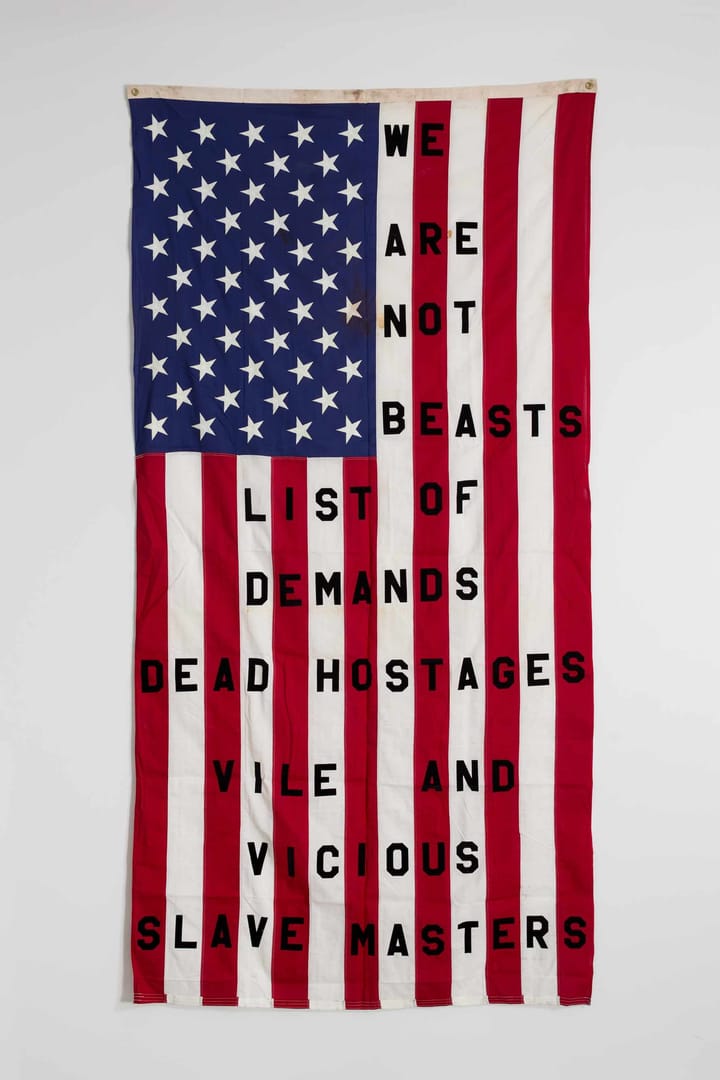
The Attica prison uprising lasted five days. It took 45 years to get a more or less complete public account of what transpired—and only thanks to the efforts of a few heroically stubborn people.
The Attica prison uprising lasted five days. It took 45 years to get a more or less complete public account of what transpired—and only thanks to the efforts of a few heroically stubborn people.
Traditionally ostracized in the weight room, women who dare to lift weights discover strength they were previously denied.
Some of the world’s largest, oldest fish live in Oregon. Why anyone would want to vandalize them, even abduct them, takes explaining.
What is the best way to honor a man like Dr. Martin Luther King, Jr.? Photographs from a cross-country trip to document streets named after the American icon.
From “Truth Trucks” to viral videos, Operation Rescue head Troy Newman’s word is his sword.
Leave the pardoning to the president. For one budding farmer, some truths are self-evident: that turkeys are stupid, dirty, and very mean.
The quirky history behind the secret, full-scale invasion that the United States once planned for Canada, and vice versa.
Studying drivers across the country for signs of license-plate prejudice—or, why everyone loves Vermont drivers and hates Texans.
With no more nudes in Playboy, an intimate approach toward sex is being lost—one longed for by soldiers in war zones.
To understand everything wrong about health care in America today, look to a horrifying trend in amputation.
The Pope spoiled his trip to America by meeting with a Kentucky clerk. But his unheard praise of a different radical provides a silver lining.
This summer’s ongoing war between Chief Keef and Rahm Emanuel is as much about urban history as holograms.
How one family schemed to be the best TV-watchers in America.
A conversation with Sarah Hepola, author of the bestselling Blackout, about investigating the worst kind of memories—those you never had.
How to give away a house in Flint, Michigan, home not only to a water scandal but record violence.
America is a proud nation of immigrants—try telling that to everyone on the other side of the door. Life as a white-collar undocumented immigrant in New York.
Why it’s the duty of every white American to burn a Confederate flag.
The American West is a myth. One Wyoming gunmaker looks anywhere else—abroad, in the past, in himself—for new wilderness.
There are eight million stories in a city. How many are there at Walmart? Random telephone calls made to hear about life inside.
Clemency is supposed to be a “fail-safe” in our judicial system. Thanks to a handful of powerful, well-paid political appointees, that notion is proving lethally incorrect.
For tens of thousands of years, wild horses have inspired humans—to nurture, to create, to slaughter—culminating in the past century of America’s legal and psychological battles over the horses we can’t own.
Class isn’t supposed to exist in America, unless it’s overcome. But the art of being upwardly mobile doesn’t always come easy.
A young girl in South Dakota—the last school-age child remaining in her community—epitomizes the challenges of rural American Judaism.
An unusual DEA raid on one of LA’s most reputable medical marijuana dispensaries reveals the bewildering conflict between state and federal drug laws.
An adventure of food and drink in San Francisco naturally expands to include Ornette Coleman, Mexican wedding cookies, and a pet monkey admiring the ocean.
Prom is a big night for many teenagers, full of firsts. First corsage. First big dance. Never mind first time in a limo—with disastrous results.
Brief updates on important stories that have tumbled off the front page—“Carry That Weight,” Brownbackonomics, the ice bucket challenge, homophobia in Russia, and more.
A visit to the granddaddy of Japan’s capsule hotels—with cot-sized individual spaces and shared amenities—and a lesson in different methods of getting along.
Just before and right after President Obama’s State of the Union address, an editor telephones complete strangers around the country, to find out what’s really going on.
An American in Dijon, France, brings his country’s grasp of recent terrorism to a nation enthralled by theory, traumatized by attack.
The Supreme Court will soon deliver a definitive ruling on same-sex marriage, a subject that has roiled the United States since the colonial era—or not. A brief illustrated history.
As President Obama enters his final days in office, a proper assessment of his tenure requires a variety of measurable, non-political categories: golf, offspring, homebrewing, and more.
Consider the Delta smelt: an old fish in California, endemic to the upper Sacramento-San Joaquin Estuary, now caught between its home and thousands of drought-stricken acres.
People living in countries that aren’t the US explain the meaning of Thanksgiving, from the splendor of “harvest day” to the tradition that is gun violence.
Brief updates to news stories that have slipped off the front page. This week: Smoking lounges at Reynolds American, Hugh Hefner’s hibernation, and the financial disasters that are Olympic Games.
In the city of Irvine, in the county of Orange, in the state of California during a season of sports, sometimes America reaches maximum volume.
More than 200 letters to the editor, op-eds, and editorials from newspapers across the US reveal a country divided on who should be allowed to vote.
What I end up saying when I try to explain to people, and myself, why I bought a vacation house in Detroit.
Life in a city, including its dangers, can be evaluated in a thousand ways. But dangerous and scary are different adjectives, and different measurements. Especially after a man appears below your stairs.
A writer becomes a carrier for the United States Postal Service out of a long-held love for the mail. What she discovers are screams, threats, lies, labor violations, and dog attacks.
New clothes, AP classes, middle-aged angst. A New York City mom reflects on being pulverized by the first day of school.
All the magic of the Mojave Desert, or the Amazon rainforest, can be found in the salt marshes of New Jersey.
After visiting more than 2,000 independent bookstores—at least virtually—the Amazon annihilation, Orwell misquotes and all, doesn't seem quite so inescapable.
The Thirteenth Amendment passed 150 years ago, abolishing slavery. Today, little of the Underground Railroad still remains. A painter hits the road to discover what’s intact.
Highlights from a reading of 200-plus letters to the editor, from newspapers in all 50 states, to determine what Crazy America thinks about raising—or lowering—the minimum wage.
Disney’s “Frozen” juggernaut has been criticized for “sexy walking.” But the roots of what’s wrong lie in Midwestern pageants, not hip-hop videos.
Years go by easier when there are 2,000 miles separating a father and son. Then an American flag turns up in your lap.
The instinct to applaud boot-strapping and the comeback kid is as American as apple pie. So why does schadenfreude make us feel so good?
Sinclair Lewis despised his hometown in Minnesota. It disliked him, too, especially after being lampooned in a bestselling novel that mocked the citizens for their small-town ways. These days, though, he's all they've got.
The California Dream is made possible by old water and big water. Unfortunately, the former doesn’t care about us, and the latter’s running dry. A native reports from the wine country, where fires loom.
The Civil Rights Act, which marks its 50th anniversary this year, changed the shape of American society. The story of how it finally passed is just as remarkable.
Dreams of a Matalin-Carville romance tempt a young Washington journalist covering the death of a dictator to cross party lines in pursuit of love.
In today’s health care system, medicine often comes with a strange, Faustian bargain—including a plan for almost everything except the price.
When Roger Ebert died, America was deprived of one of its finest critics. We also lost one of our best writers on addiction.
A gentleman in 1720 could read Greek while mounting a running horse. Today’s gentleman reads GQ in the bathroom. From rapists to stylists, a history of the American gentleman.
For decades, the NFL has been supported by ads that degrade women. But something changed in 2013—and it’s got everything to do with concussions. Prepare for the battle of mama-friendly beer spots.
Fifty years after Dallas, an illustrated guide to every person, plot, and nefarious organization ever accused of killing JFK.
Lincoln’s speech at Gettysburg was short: only three minutes long, following a moving, two-hour performance by famed orator Edward Everett. It also was nearly meaningless.
Cracks are appearing in football’s helmet—injuries to athletes, injuries to the game. For one former high school and college player, the damage has gone too far.
A group of gray-haired representatives from across Europe gather in a central London gentlemen’s club to discuss the United States’ aggressive spying techniques.
Going on a five-day cleanse—subsisting on a diet of shots, smoothies, very few actual foods, and no caffeine—leads to visions of apocalypse. From 2013, a quest to find the seven billionth child on Earth.
Once again the debt ceiling's up for grabs. Everything you need to know—in cartoon form—about previous fiascos.
As another military intervention gets underway—with your name on it—we thought a brief tour of recent history in Syria would be useful, with lots of pictures.
In light of the ongoing Snowden leak, the National Security Agency has begun mailing apology notes to private citizens. However, since it did take the time to read your correspondence, advice may be included.
When a vacation rental doesn’t live up to expectations, when that “charming Montauk cabin” turns out to be a shed, one family’s solution is passive-aggressive guestbook commentary.
Think baseball today is rotten from drugs and punks? A century ago, things weren’t much better. A brief history of baseball's dark traditions—cheating, substance abuse, obscenity, violence—and the colorful players who brought them to life.
Generation X has always been able to fashion its own best outcome. Now it’s time to take that DIY attitude and fix the nation. Because you know who really won the American Revolution? That’s right: Slackers.
In the late 1870s, baseball was at risk of dying out before it even got started, strangled by a teetotaling, law-abiding, church-going new league. Then a German saloonkeeper in St. Louis got involved.
A special Fourth of July edition of our series where an editor randomly calls people in small towns around America to see what’s happening.
This week, Detroit’s new emergency manager released his first report on the city’s dire affairs. But residents have long been accustomed to life in what’s essentially a failed state. A native author meets the motorcycle men working hard to save Detroit, one fiend at a time.
After six months in Leipzig, a German reporter asks the novelist what he’ll miss. But it’s back here in the United States where more dangerous questions take shape, none easily answered with good beer.
Flash fiction—prairie-style—from novelists Jonathan Lethem and Aimee Bender, plus an interview with Jeff Martin, editor of the new collection Imaginary Oklahoma.
America is full of guns—one gun for every citizen—and Americans often use them to shoot one another. It’s not enough anymore to say we love our guns. The question is: Why do we kill?
Pyongyang’s frequent threats toward the United States appear to be ratcheting up in intensity. How did we get to this point? An illustrated guide to the relationship’s recent romance, and why you should be nervous about North Korea.
The media has labored to stress the humility of the 266th and current Pope of the Catholic Church. But somehow they missed his taste for Burt Reynolds movies, and other signs of holy humbleness.
The United States is a huge country, much too big for the nightly news. Our series continues where one of our editors randomly calls people in small towns around America to find out what’s really going on.
Good book clubs rely on commitment, Sauvignon Blanc, and the pruning of members with annoying habits. Unfortunately, sometimes those members are homicidal maniacs.
Our man in Boston sits down for a frank accounting with Tony Horwitz, author of beloved works like Confederates in the Attic: Dispatches From the Unfinished Civil War. Here they chat about his new book on John Brown—still a divisive figure in America, particularly in these days of terrorism—and the
Yesterday morning, a plane landed at an airport. A man who was or was not a famous actor, and a writer who was or was not in love with him, stood on the verge of finally meeting. A Valentine's Day story for the romantic and/or foolish at heart.
Even in the most forsaken corners of the Caucasus, daily life can boil down to domestic turmoil, hip-hop videos, and arguing over Bryan Adams’s nationality.
When your life is opened in front of you, all your old attachments shucked off, the task of finding a new ending can be as simple as handing over a bag of guns.
Ever since Lance Armstrong told Oprah about his persistent doping, lying, and just plain being mean, celebrities are lining up for their own public confessions. Starting with “Breaking Bad’s” Walter White.
Even if you grow up crushing on the jets in Top Gun—and not Tom Cruise—it can be tough to preserve a dream of defending your country from a plane. But some girls do.
More than a decade after the U.S. invasion of Afghanistan—now our longest war—most Americans still know next to nothing about the people who live there, and the liberties denied them. Lessons from a rapid education.
The great American wilderness is home to hungry stomachs, including some that reside in animals weighing 600 pounds more than you.
The line to speak with a consular official is never so long as when you’re studying 19th-century philosophy and everything you desire exists on the other side of an ocean.
A happy cul de sac experiences its first affair. Soon every living room—every computer screen—reverberates with news bulletins. Even for the Facebook generation, divorce comes with surprises.
Our man in Boston sits down for an extended chat with the author of Billy Lynn’s Long Halftime Walk, covering Kissinger's travel woes, the beauty of track meets, and the very best place to be a fiction writer in America: Dallas.
It’s easy to hate Starbucks until you admit it’s responsible for nearly everything good in today’s coffee culture. Now the behemoth is poised, with a recent acquisition, to introduce America to hundreds of years of tea culture. A tea maker is grateful.
Manhattan is rife with lumberjacks, Los Angeles is hot for Appalachia, and the latest trend in pornography is cabins. Yes, cabins. But when a woman leaves New York for a log structure of her own, a metamorphosis occurs.
These days, everyone seems to enjoy tending chickens and eating local. But lifestyles are rarely ways of life, and the grain that goes into our daily bread is still easiest to obtain from giant operations. Visiting a dying small farm shows why.
One of the most striking differences between U.S. presidents is how they choose to stock the White House bar. From teetotalers to all-out drunks, a brief history of presidents and their preferred libations.
Our series continues with more random phone calls around small-town USA to find out what’s really going on. This time our editor only makes his calls at night, to see what happens when America goes dark.
Small donations comprise more than half of President Obama’s war chest. Small donors, on the other hand, constitute some of the world’s most overwhelmed email recipients. But all that follow-up isn’t just about cash—it’s about subtle changes being made inside your head.
The White House has been lauded for its grassroots internet campaigns to raise money. But what happens when a man takes the president's messages too personally?
Preparing for Thursday’s vice presidential showdown, Republican candidate Paul Ryan consults Theodor Seuss Geisel to simplify his message so that even a child—or American voter—can understand.
Rare is the college graduate who’s attended more than one school. But when you’ve attended four very different types of university, it’s incumbent upon you to share what you’ve learned.
Artist colonies are mysterious places. Available only to a select few, supposedly teeming with alcohol, affairs, and creative hoodoo. But the rumors aren't true—they just lack detail. Scenes and lessons from three residencies.
America's funeral parlors rely on one man to provide the theme music for your grandmother’s memorial service, the pop radio for your cousin’s wake. Welcome to “semi-spiritual” ambient music and the stuff of contemporary mourning.
Our country is colossal, much too big for the nightly news. Our series continues where a TMN editor randomly calls people in towns around America to find out what’s really going on.