
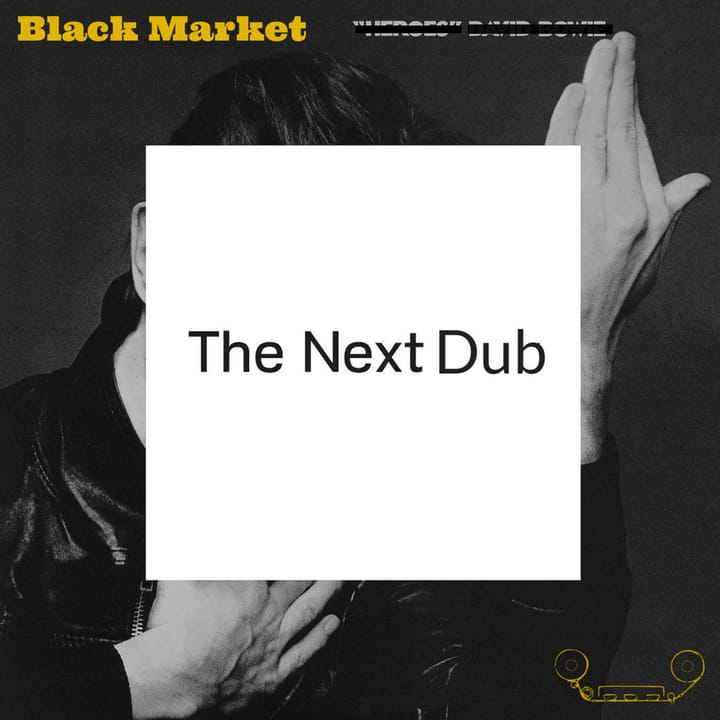
Black Market Dub and an Alternate History of Popular Music
Turns out that reimagining the music you know and love through a dub filter makes you love it even more.
Turns out that reimagining the music you know and love through a dub filter makes you love it even more.
What is the best way to honor a man like Dr. Martin Luther King, Jr.? Photographs from a cross-country trip to document streets named after the American icon.
The quirky history behind the secret, full-scale invasion that the United States once planned for Canada, and vice versa.
After a lifetime of mental illness, one woman opts to try electroconvulsive therapy. She discusses her decision with her sister.
A conversation with Sarah Hepola, author of the bestselling Blackout, about investigating the worst kind of memories—those you never had.
Twice the official portraitist of George W. Bush, painter Robert Anderson explains what it’s like to build a relationship with a president, separate the man from the legacy, and struggle with his smirk.
Reddit's “Ask Me Anything” interviews—edited for the seven deadly sins—provide an Idolatry of Self so big, it produces Zen koans.
What should readers demand from their reporters? Find the shadows. Examine the complex problems. And captivate us. Journalists from Slate, Deadspin, ProPublica, NPR, and more on what readers should expect.
Flash fiction—prairie-style—from novelists Jonathan Lethem and Aimee Bender, plus an interview with Jeff Martin, editor of the new collection Imaginary Oklahoma.
Our man in Boston sits down for a frank accounting with Tony Horwitz, author of beloved works like Confederates in the Attic: Dispatches From the Unfinished Civil War. Here they chat about his new book on John Brown—still a divisive figure in America, particularly in these days of terrorism—and the
The NFL is an emperor with no clothes, no morals, and vaults of gold. As we prepare for Super Bowl XLVII, author Dave Zirin explains how greed and corruption have ruined the game, endangered players, and fleeced the public.
Our man in Boston sits down with Martin Amis for their sixth chat to discuss Nabokov, dictionaries, spiteful reviews, the death of Christopher Hitchens, and the freedom of writing fiction.
Our series of contemporary Russian literature continues—six months, six stories from some of Russia's best working writers, plus interviews with their authors, all of it sponsored by Powells.com. This month we feature one of Moscow's finest chroniclers.
When it launched, Playboy was a literary power, nude photos or not. Its offices also happened to be an interesting place to work—for women.
Hank Williams III blew the doors off country music last fall when he released three ambitious, experimental albums all on the same day. A conversation about tradition, hardcore, and punishment.
Our man in Boston talks to author and artist Ben Katchor about the history of picture-stories—from the days when literature included drawings to our current world of (sadly) more purified genres.
The United States is an enormous country, much too big for the nightly news. We asked one of our editors to randomly call people in towns around America and find out what's really going on.
Our man in Boston sits down with the extremely likeable Arthur Phillips to chat about everything, including his latest novel.
Our man in Boston sits down with the author of the "Berlin Noir" trilogy and other books, to talk about detectives, Nazis, and Impressionist writing.
Our man in Boston sits down with writer Andre Dubus III to discuss the differences between memoir and autobiography, Harvard and UMass students, and when it is inappropriate to send an email.
Our man in Boston talks with memoirist and historian Carlos Eire to discuss Cuba and Operation Peter Pan, when 15,000 children were airlifted away from their parents.
Our man in Boston sits down with author Gretel Ehrlich to talk about daily life in the Arctic Circle, good wine, Tom McGuane, and how to go online from an off-the-grid cabin in Wyoming.
Our man in Boston sits down with Scott Spencer, author most recently of Man in the Woods, to talk about writing, dogs, and show business.
Our man in Boston speaks Mary Roach, author most recently of Packing for Mars, about severed-hand fan mail, writing in an office, and Coke in space.
Our man in Boston talks to the author of Super Sad True Love Story about writing in the near-future, signing readers' e-readers, and abusing a six-foot bong.
Our man in Boston talks with author (and TMN contributor) Jessica Francis Kane about a tragedy during the Blitz that's the focus of her new novel, The Report.
Our man in Boston sits down with author and New Yorker editor Ben Greenman to discuss independent publishing, the edges of art, and Celebrity Chekhov.
Our man in Boston sits down to chat with author Jennifer Egan about her new novel, A Visit From the Goon Squad, and what it's like to write in PowerPoint.
Ten years after their first conversation, author David Mitchell and our man in Boston discuss 18th-century Japan, shoplifting from other novels, and Mitchell's annual Christmas party.
A conversation with Australian novelist Richard Flanagan about the erosion of book culture, Nicole Kidman's genius, and souls that are ever underline-able.
Our man in Boston goes the distance with author and New Yorker editor David Remnick in a conversation about President Obama, magazine publishing, and American Idol.
As lightbulbs are to the moon, first stories are to finished books. John Warmer chats with the writer Philip Graham, his former professor, about finding topics, developing mentors, and reaching readers.
Our man in Boston talks to Michael Ondaatje about why he writes novels, how he measures satisfaction, and when fiction can succeed by operating like poetry.
Our man in Boston talks to Tobias Wolff about the art of revision, how writing programs are good for training skilled readers, and why Robert Olen Butler still signs stock.
The turntablist now known as DJ Premier got help at critical moments in his rise from a piano-playing childhood in Houston, and these days he's looking to spread the love.
Our man in Boston chats with author Gil Adamson about Toronto's literary mafia, the fact-checking that plagues novelists, and the difficulty of listing 10 Canadian writers.
Our man in Boston talks with novelist Joseph O'Connor about writing historical fiction, the role of the Irish in the American Civil War, and the trouble of trilogies.
In a wide-ranging discussion, our man in Boston talks with novelist and skeptic James Howard Kunstler about life as it is, life as it could be, and life as we may encounter.
More than four decades into his career as a rock mentor, Iggy Pop talks about getting back with the Stooges and finding a daily rhythm that suits him.
Professional opera singer, mountain climber, race car driver, and Vladimir Nabokov’s best translator and collaborator, Dmitri Nabokov has led an impassioned life.
Early hardcore was characterized by frontmen like Black Flag's Henry Rollins, who had the perseverance and genius to rise above convention. But as Rollins tells it, change is less an event than a lifelong process.
Straight from Boston, a conversation with author Amy Bloom on her latest book, Away, the benefits of the writing life, and the tedium of extra-long novels.
Our man in Boston sits down with author Elizabeth Strout to talk about Maine, her latest novel, and the plights of the modern writer. Now with audio excerpts.
Having spent a quarter-century pushing Americans to face the music, the former Dead Kennedys vocalist sits down to tell his thoughts on Obama, political parties, and participatory democracy.
The estimable Chip Kidd, designer of books' fronts, backs, and spines, chats with our man in Boston about what it's like to work on the words that come in between.
Three novels under his belt, Arthur Phillips sits down for a chat with our man in Boston about his commitment to fiction writing and, a challenge on quite another level, finding the discipline to focus on one piece at a time.
The jazz chanteuse talks about meeting a legend, experimenting with styles, and finding her own voice.
It's humans' flaws that make the world go round, and novelist Susanna Moore examines them under intense magnification. She chats with our man in Boston about crime and punishment.
When history class turns into a blur of names and dates, historical fiction may be just what you need to put a face on things. Thomas Mallon talks with our man in Boston about the appeal of novels and the state of publishing.
For singer Cassandra Wilson, some of the best music is composed on the fly, and if the entire performance is last-minute, so much the better.
Growing up in a family that requires Saturday night recitals is a crash course in how to please a crowd. A conversation about a lifetime of commanding performances.
Transplanted Irishman Colum McCann has just finished a ramble with Gypsies in his newest novel, Zoli. A conversation about the Romany people, the perils of writing novels tied to history, and more.
Pianist Cecil Taylor stormed onto the New York City club scene in the 1950s, shaking the foundations of modern music with what would become known as free jazz. A conversation with the master.
Sigrid Nunez wanted to be a dancer, and lucky for her readers, that didn't work out as planned. Nevertheless capable of some deft footwork, she explains to our man in Boston how the two pastimes are similar.
The Mick Jagger of British literature is out with another book slated to be a hit. A conversation about everything important under the sun: getting older, the differences between life in Uruguay and London, and the best ways to write fictional footnotes.
Jazz saxophone legend James Moody talks about how racism shaped his early career, what a "hot flute" can do for a repertoire, and encouraging budding musicians.
Our man from the north country toasts the new year by conversing with the novelist and editor about her thoughts on the state of therapy, storytelling, and the novel.
Experienced musicians sometimes find it tempting to stick with already-established styles in their later albums. Jazz pianist Eliane Elias talks about breaking the mold.
Nigerian novelist Chimamanda Ngozi Adichie talks about her new book and the Biafran War, being African in America, and the distorted picture of Africa created by the media.
Bossa nova was developed more than 40 years ago in Brazil, but one of its most lively contributors is working today in Brooklyn. A chat with Vinicius Cantuária about his music, how it's changed, and what inspires him.
Historian Sean Wilentz talks about social studies versus history, purple prose in founding-father biographies, and how "states rights" started trumping slavery in Jefferson Davis's memoirs.
Argentina's Soda Stereo may have lost its pop about 10 years ago, but since then guitarist Gustavo Cerati has proved his skills as a soloist many times over, leaving an indelible mark on rock en español.
Reporting a civil war in Africa sounds tough, but try investigating a 40-year-old crime in America's quietest suburb. A chat with journalist Sebastian Junger about his new book on the Boston Strangler.
The great American novel doesn't exist--except in the minds of marketers (and those who believe New Yorkers write the best books). A conversation with Susan Straight about regional writing, as American as apple pie.
After 40 years in music, how's a singer keep things interesting? Talking with Brazil's treasure, Gal Costa, about how things change, and how they stay the same.
A rowdy conversation about Talese's new memoir, Lorena Bobbitt's Hollywood agent, attending fights with James Baldwin, and a hundred other reports about the joys and pains of getting a story right.
UFO freaks, plant-loving vets, and science-minded slave owners people Stephen Wright's novels. Maybe a little off the wall? Maybe not. We talk with the writer about his books and their reflections of the human condition.
Writer and off-the-charts associater Lawrence Weschler talks about his new book, Everything That Rises: A Book of Convergences, plus publishing as an act of citizenship and the joy of sideways learning.
Author and 2005 Rooster winner David Mitchell talks about his new novel, Black Swan Green, the appeal of Bill Evans, and the differences between sex and writing.
The fascinating author and journalist Richard Reeves talks about writing Reagan, founding New York magazine, and covering Lévy's America more than 20 years ago.
Should "America" only include the United States? Does art criticism matter when it doesn't account for emotions? A conversation with author Alberto Manguel about working with Borges and responding to paintings.
Politics can be dangerous in some parts of Africa, but childhood can be even more risky. A conversation with Uzodinma Iweala about what's breaking the continent apart--and what's holding it together.
When musician and producer Andres Levin plays with sound, he doesn't only create music, he fuses cultures.
Author and Columbia professor Andrew Delbanco, named by Time as "America's Best Social Critic," talks about his new Melville biography--one that's actually enjoyable to read.
Strings, branes, and baryogenesis--our man in Boston is guided through contemporary science by one of the country's top theoretical physicists, Lisa Randall.
While the publishing world freaks out over false memoirs, who better to speak about truth in writing than an author with the same name as his protagonist?
Tens of thousands of American soldiers are in Iraq, but only a handful of U.S. journalists are covering the story from the inside. One of them, George Packer, talks about bravery, ideology, and changing opinions.
Acclaimed bassist Bill Laswell has his own way of making music, and these days it involves some serious drum and bass. One performance, and a life's work.
American business has preserved the conformity of the '50s but ditched the job security--what happened? A conversation about the terror of applying for jobs when experience doesn't matter.
When novelists are listed among our most despicable citizens, can America claim to love literature? Our man up north talks to author Rick Moody about how we're all on the same team when we're reading.
Our man from New England talks to one of the Carolinas' favorite sons about the strengths of southern writers, the benefits of teaching welders, and the crushing reality that awaits MFA grads.
A reactionary shudder is sweeping through the book world as the status quo realizes it's terrified of literature. Our man in the mountains speaks with author Jonathan Lethem, who tears into the idea of "realist" vs. "anti-realist" fiction.
Our man in Boston gets nostalgic for his Chicago roots in this wonderful conversation with short story master Stuart Dybek about the city of Daley, Bellow's turf, and the difficulty of writing in a sentimental, nevermind linear fashion.
What happens when traditional instruments won't produce the sound the composer wants? Then new instruments have to be invented. A discussion about deconstructing, reconstructing, and ways to break the barriers of sound.
Do fiction writers put their best face forward in their work or in their private lives? Will the next story always be the one that maybe gets it right? A conversation with the extraordinary author about the craft.
A simple statement but a nightmarish one: we can no longer expect to have more energy, only remorselessly less energy. An intense chat with author James Howard Kunstler about the chaos that will rattle our society once the energy disaster takes hold.
The humanities are ruined, and the universities full of crooks. Art in America is neglected, coddled, and buried under chatter. The right looks down on artists; the left looks down on everyone. Our man in Boston has an electrifying conversation with Camille Paglia.
It can take six weeks to write six minutes of fiction, and that's not so bad. A conversation with the author of Saturday about taking the time to do your thing, the changing face of literary culture, and how everybody really can write a novel.
Queens may sport the most languages spoken in New York City, but Brooklyn certainly has the most writers. Our man in Boston talks with Brooklynite Elizabeth Gaffney about her new book, set in 19th-century New York, and her 16 years editing the Paris Review with George Plimpton.
Do genre writers have more fun than plain old novelists? Is it possible to embed philosophical thought in a thriller? For an all-around TMN smorgasbord, our brain in Boston chats with Contributing Writer Kevin Guilfoile about his new novel.
Prejudice cannot be defeated entirely, but it can be fought with courage and stamina, and with really good lawyers. Our bookish reporter in Boston has a fascinating conversation with scholar Deborah Lipstadt about her six-year battle with Holocaust denier David Irving.
Are we comforted by the official account of Sept. 11--the victims, the heroes, the assigned roles of good and evil--or do the generalizations shortchange our experiences? A conversation with novelist Jonathan Safran Foer about his new book, the writing life, and what it's like to be reviewed by Updi
Writers often imagine editors as dolts with hearts of coal and brains of corn; writers, frequently, are self-absorbed paranoid ignorant dilletantes. A conversation about how the publishing system really works and the life of a Celtics fan who only loves Bird.
Lots of folks complain that the movies aren't what they used to be, but not many people can tell you why. Our man of the north has a fascinating talk with film critic and writer David Thomson about the start of the art, Million Dollar Baby, and how Nicole Kidman went from bimbo to genius.
Few writers have all their books in print; extremely few have almost a hundred in circulation. A conversation with Robert McCrum about his recent definitive biography of P.G. Wodehouse and the difficulties in pinning down a man who liked to blend in.
What would a 1950s family near Niagra Falls say about an episode of The Sopranos? Why does America so easily forget its ordinary heroes? A conversation with the prolific Joyce Carol Oates about her most recent novel, why she loves to teach, and how many other books are gestating in her desk.
Our man in Boston talks with author Louis de Bernières about his most recent book, Birds Without Wings, during a fascinating discussion about the Ottoman Empire, how good people go astray in crowds, and the richness of Arab proverbs.
If we spend so much of our lives thinking and worrying about sex, is it any surprise the involved emotions are tied to chemicals? A conversation with maverick author T.C. Boyle in a lively back-and-forth about Dr. Alfred Kinsey, contemporary fiction, and the role of the husband in the kitchen.
No one can escape their past, and everyone once had parents who made mistakes. Our New Hampshire correspondent chats with the wonderful Cynthia Ozick about the underpinnings of her new novel, the rewards of touring, and exactly how do publishers think.
All parents want their children to do well; not all parents want their children to become writers. Author Lan Samantha Chang chats with our man in Boston about her new novel that was 10 years in the writing, and her slide from upstanding daughter to rebel with a clause.